Contact Us
We would love to hear from you. If you have any questions or suggestions, please reach out to us at:
Email: [kwonhs84@naver.com]
Contact Us
We would love to hear from you. If you have any questions or suggestions, please reach out to us at:
Email: [kwonhs84@naver.com]
About CashPivo
Welcome to CashPivo. This blog provides insights on business financial security, newsletter monetization, and digital marketing strategies for 2026. My goal is to share actionable advice to help entrepreneurs succeed
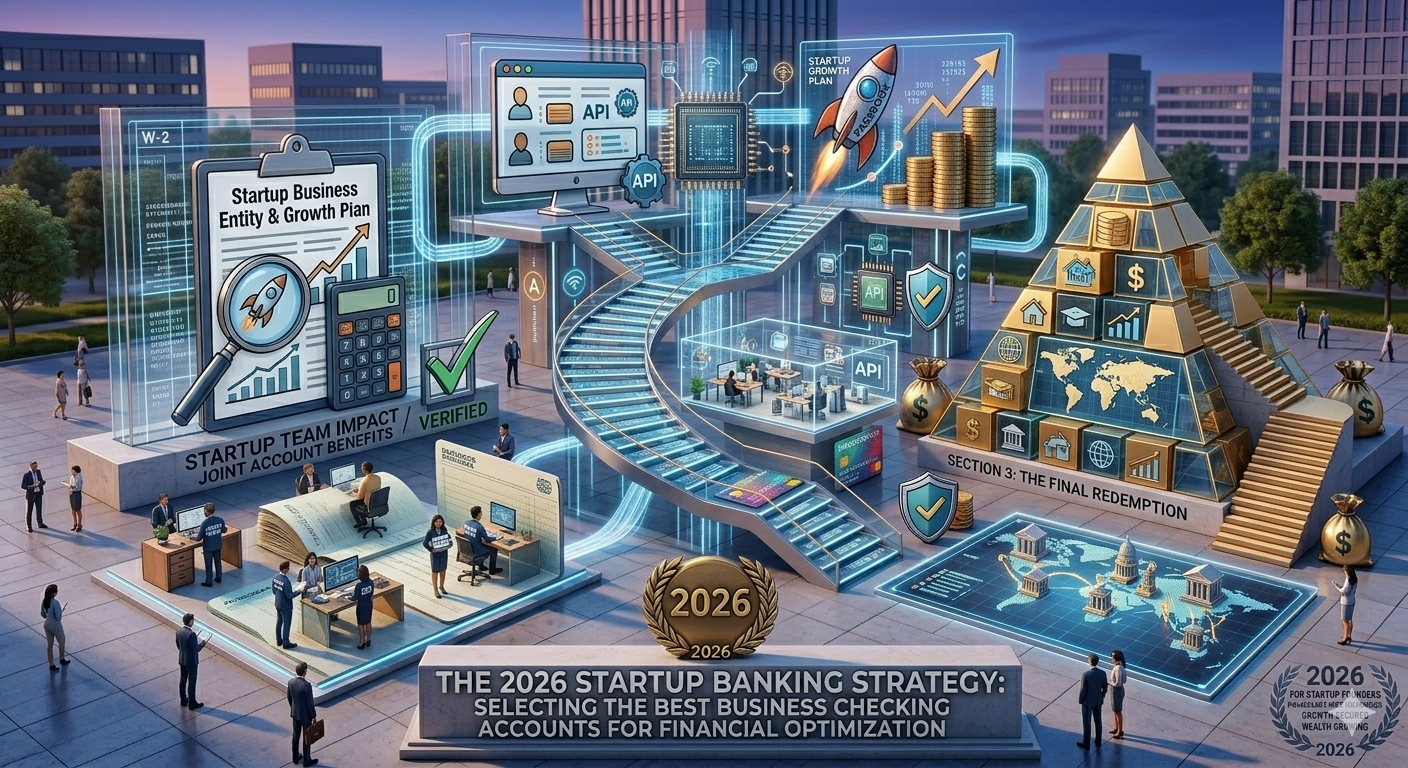
The landscape of American entrepreneurship has shifted dramatically in the first half of 2026, driven by a volatile cocktail of geopolitical tension and a fundamental rewriting of the financial regulatory playbook. For startup founders, the “set it and forget it” approach to business banking is officially obsolete. As of May 2026, financial optimization requires a strategy that balances the high-yield environment of a hawkish Federal Reserve with the newfound agility granted by the Consumer Financial Protection Bureau’s (CFPB) latest open banking mandates. Selecting the right business checking account is no longer just about avoiding monthly maintenance fees; it is about positioning your company to thrive in an era where data portability and real-time liquidity are the primary currencies of growth.
The most significant catalyst for change this month is the full implementation of the CFPB’s Section 1033 regulations, which went into effect for large financial institutions in April 2026. This “Open Banking” mandate has effectively broken the traditional banks’ monopoly on customer data, allowing startups to move their financial history, transaction records, and payroll data between providers with unprecedented ease. For a founder, this means the “switching cost” that once tethered businesses to subpar legacy accounts has vanished. You can now integrate your primary checking account with a suite of AI-driven “financial co-pilots” that proactively manage cash flow, automate tax set-asides, and hunt for the best yield across the market.
Simultaneously, the Federal Reserve’s stance has taken a decidedly sharp turn. With the incoming Fed Chair, Kevin Warsh, taking the helm this week, the market is bracing for a “higher-for-longer” interest rate environment. Inflation has proved sticky at 3.8%, exacerbated by the ongoing energy price surges resulting from the conflict in the Middle East. With the federal funds rate currently hovering between 3.5% and 3.75%, leaving your operating capital in a non-interest-bearing account is a form of financial negligence. Optimization in 2026 means seeking out accounts like Bluevine or Grasshopper, which are currently offering between 3.0% and 3.5% APY on qualifying balances. For venture-backed startups with larger cash reserves, the strategy has shifted toward “treasury-first” banking. Platforms like Mercury and Brex have evolved beyond simple checking, offering automated sweeps into government money market funds that capture the current high-yield environment while maintaining the FDIC-insured safety net that remains a non-negotiable priority following the regional banking jitters of years past.
However, the 2026 strategy isn’t just about chasing yield; it’s about navigating a more complex regulatory web. President Trump’s May 19 Executive Order on “Integrating Financial Technology Innovation” has signaled a federal push to streamline the “regulatory plumbing” that often slows down fintech-bank partnerships. This is expected to lower barriers for digital-first platforms to access Federal Reserve payment rails directly, potentially leading to even faster domestic and international wire settlements. Yet, this innovation comes with increased compliance demands. The Corporate Transparency Act’s Beneficial Ownership Information (BOI) reporting is now a standard hurdle, and a new phased mandate for small business lending data collection begins on July 1, 2026. When selecting an account, you must ensure your provider has the automated infrastructure to handle these reporting requirements without adding administrative friction to your daily operations.
For many US startups, the “hybrid banking” model has emerged as the gold standard for 2026. This involves using a tech-forward fintech like Mercury or Relay for daily operations—leveraging their superior API integrations, virtual card flexibility, and no-fee international wires—while maintaining a secondary relationship with a traditional powerhouse like Chase or Bank of America. The traditional “Big Banks” still hold the advantage when it comes to complex credit needs, SBA 7(a) loans, and physical branch access for the rare occasion when cash deposits or in-person notarizations are required. By splitting the stack, founders can enjoy the agility of modern fintech while keeping a foot in the door of the institutional stability required for long-term scaling.
Ultimately, the best business checking account for your startup in 2026 is the one that treats your data as an asset and your cash as a productive tool. As you evaluate your options this quarter, prioritize providers that offer native integrations with your accounting software, transparent fee structures, and—most importantly—the ability to pivot as the Federal Reserve reacts to the shifting global economy. In a year defined by uncertainty, your banking strategy should be your most reliable engine for stability and optimized growth.