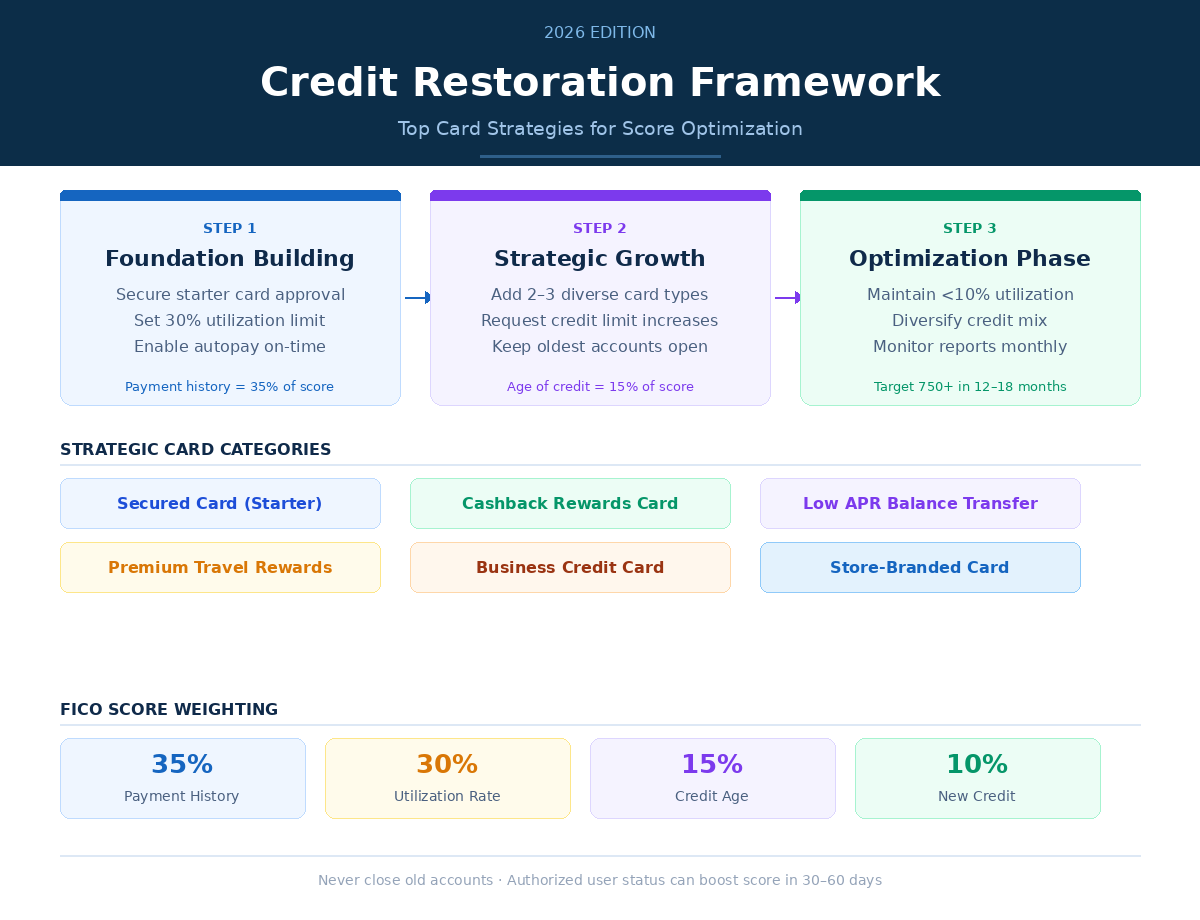
Navigating the financial landscape in May 2026 requires a fundamental shift in how we perceive creditworthiness. For decades, the American credit system relied on static snapshots—a single moment in time that determined your financial reputation. However, as of today, May 21, 2026, we have officially entered the era of trended data. With the Federal Housing Finance Agency’s recent push for the widespread adoption of VantageScore 4.0 and the impending full integration of FICO 10T this summer, the “Credit Restoration Framework” has evolved from a game of quick fixes to a strategy of sustained behavioral patterns.
The most significant change in 2026 is the 24-month lookback period. Unlike older models that only cared if you were current today, these modern frameworks analyze your trajectory. They look at whether your balances are rising or falling over time and, crucially, whether you are a “transactor” who pays in full or a “revolver” who carries debt. To optimize your score under this new regime, the top strategy is no longer just making on-time payments; it is demonstrating a consistent reduction in total utilization. Even if you cannot pay a balance in full, paying even twenty dollars above the minimum is now a positive “trend signal” that can boost your score more effectively than the old-school method of keeping a small balance to “show activity.”
We must also address the complex reality of medical debt, which has seen a turbulent legal year. While the Consumer Financial Protection Bureau’s 2025 attempt to ban all medical debt from credit reports was vacated by federal courts, the “Big Three” bureaus—Equifax, Experian, and TransUnion—have maintained their voluntary commitment to exclude medical collections under $500 and all paid medical debts. For those looking to restore their credit today, the strategy is surgical: prioritize settling small medical bills first. Because anything under that $500 threshold vanishes from your report entirely, it offers the fastest “points-per-dollar” return on investment for score optimization.
Furthermore, the rise of Buy Now, Pay Later (BNPL) services has finally reached a tipping point in 2026. While many providers like Afterpay and Zip still do not report routine “pay-in-four” transactions to the major bureaus, others like Affirm and Sezzle have expanded their reporting capabilities. If you are in the restoration phase, you must be selective. Using a BNPL service that doesn’t report on-time payments does nothing for your score, but a single missed payment can still be sent to collections and devastate your file. The 2026 framework suggests using “credit-builder” specific BNPL options only when they guarantee reporting to all three bureaus, effectively turning your everyday purchases into a structured installment loan.
For non-citizens and “thin-file” borrowers, the clock is ticking. Following the executive order signed just two days ago on May 19, 2026, the use of Individual Taxpayer Identification Numbers (ITINs) is being reclassified as a banking “risk factor.” This means that the window for using an ITIN to secure a traditional credit card may begin to close as stricter verification requirements take effect this July. If you are currently building credit via an ITIN, the most effective strategy is to secure a card now and establish a solid payment history before the new guidance is fully implemented by lenders.
Finally, we cannot ignore the macro-economic environment. With the Federal Funds Rate holding steady at 3.75% and average credit card APRs hovering near 19.4%, the cost of carrying debt is historically high. The “Credit Card Competition Act of 2026,” currently moving through Congress, aims to lower merchant swipe fees, but experts warn this could lead to a contraction in rewards programs and stricter approval or “limit-capping” algorithms. To stay ahead, focus on “limit preservation.” Avoid requesting high limit increases that trigger hard inquiries; instead, let the new trended scoring models naturally reflect your lower utilization, which often triggers automatic, soft-pull limit increases from issuers looking to retain low-risk borrowers.
Optimizing your credit in 2026 is less about “hacking” the system and more about aligning with its new transparency. By understanding that your financial behavior over the last two years is now just as important as your behavior this morning, you can build a resilient framework that not only restores your score but secures your future in an increasingly data-driven economy.
Leave a Reply