• The 2026 SBA 7(a) Loan Application Framework: A Strategic Step-by-Step Optimization Guide

    The 2026 SBA 7(a) Loan Application Framework: A Strategic Step-by-Step Optimization Guide

    The landscape of American small business financing has undergone a seismic shift as we move through the second quarter of 2026. For entrepreneurs and established business owners alike, the SBA 7(a) loan remains the gold standard for flexible, government-backed capital, but the “how” and “when” of the application process have been fundamentally redefined by recent policy updates. Navigating this new framework requires more than just a solid business plan; it demands a strategic understanding of the latest regulatory pivots, from historic limit increases to tightened eligibility standards that took effect earlier this spring.

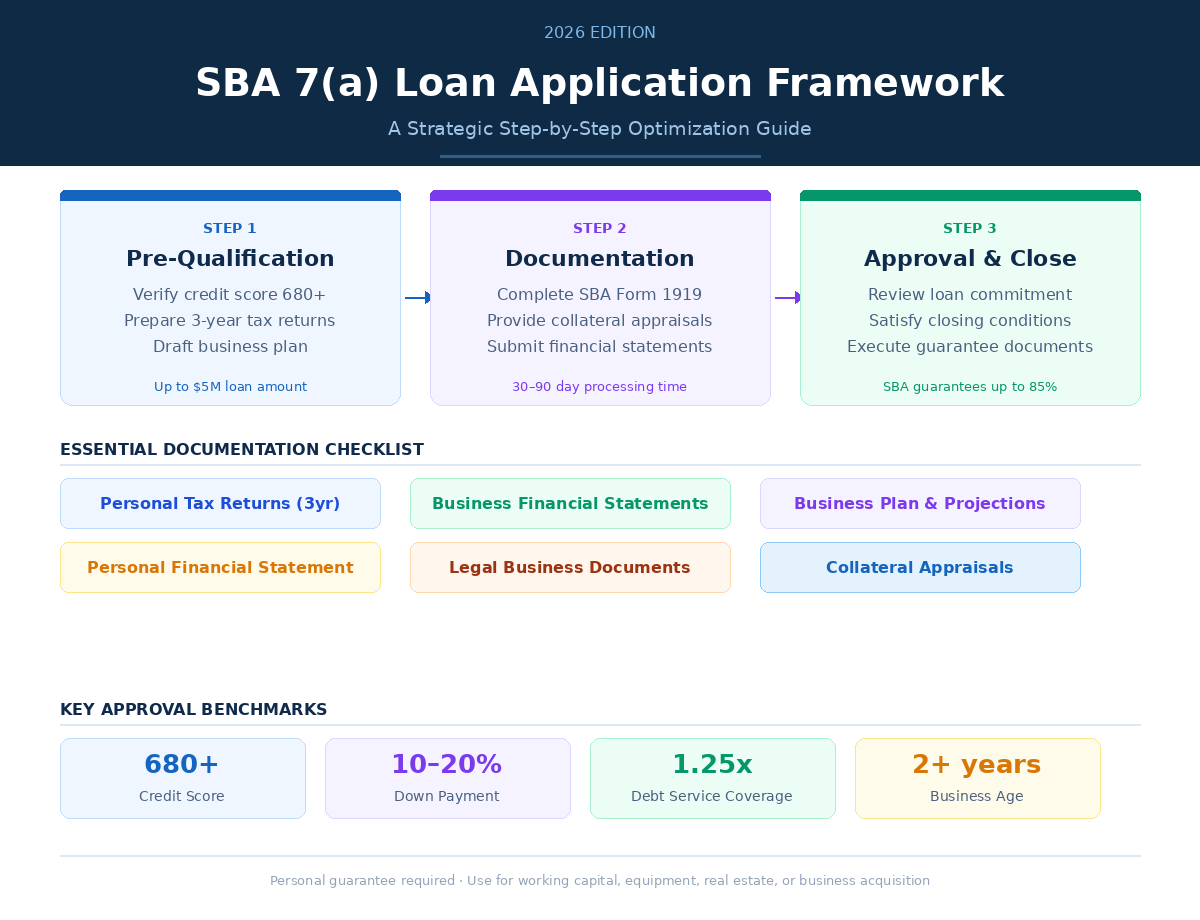
    As of May 21, 2026, the most significant headline for growth-minded enterprises is the Small Business Administration’s recent announcement regarding cumulative lending caps. Effective July 4, 2026, the agency is doubling the combined limit for 7(a) and 504 loans to a record $10 million. By decoupling these two programs, the SBA now allows qualified borrowers to access up to $5 million through the 7(a) program for working capital and an additional $5 million through the 504 program for fixed assets. This change is a game-changer for capital-intensive industries like logistics and construction, providing a level of liquidity that was previously out of reach for many mid-sized small businesses.

    However, with expanded access comes a more rigorous and localized underwriting environment. On March 1, 2026, the SBA officially sunset the use of the FICO Small Business Scoring Service (SBSS) for loans under $350,000. In its place, the agency has empowered individual lenders to use their own internal credit models, provided they adhere to a strict debt-service coverage ratio (DSCR) of at least 1.10:1. For the applicant, this means that “lender fit” is now more important than ever. Because your approval is no longer tied to a centralized government score, you must optimize your application to meet the specific risk appetite of your chosen bank or credit union. Success in this environment starts with a meticulous review of your historical and projected cash flow to ensure you comfortably exceed that 1.10 threshold.

    Simultaneously, the SBA has tightened its stance on ownership. A critical policy update that went into effect this March now requires 100% of a business’s direct and indirect owners to be U.S. citizens or nationals residing within the United States. This rescinds previous exceptions that allowed for minority foreign ownership, making it imperative for companies with complex international equity structures to audit their cap tables before initiating the 7(a) process. This “America First” approach to lending is mirrored in the current fee structures for the 2026 fiscal year, which offer unprecedented advantages to the manufacturing sector. If your business falls under NAICS codes 31-33, you can currently benefit from a 0% upfront guaranty fee on 7(a) loans up to $950,000—a move designed to support the ongoing reshoring of American industrial production.

    Interest rates in May 2026 have stabilized following the Federal Reserve’s late-2025 easing cycle, with the Wall Street Journal Prime Rate currently sitting at 6.75%. For a standard 7(a) loan over $250,000, variable rates are generally capped at Prime plus 2.25%, landing most well-qualified borrowers in the 9% APR range. While these rates are higher than the historic lows of the previous decade, the SBA’s expanded “use of proceeds” rules offer new ways to deploy this capital. In a nod to the technological revolution, the SBA now explicitly allows 7(a) funds to be used for AI-related expenses and digital infrastructure upgrades, recognizing these as essential tools for modern competitiveness.

    To optimize your application within this 2026 framework, your first step should be a “pre-flight” eligibility check that goes beyond basic credit. Ensure your ownership structure is fully compliant with the new 100% citizenship rule and that your financial statements are prepared to withstand a lender-specific DSCR analysis. If you are a manufacturer, leverage the new Manufacturers’ Access to Revolving Credit (MARC) program or the 7(a) Working Capital Pilot (WCP) to minimize fees and maximize flexibility. By aligning your request with these specific 2026 priorities—high-tech integration, domestic ownership, and industrial growth—you position your business not just to secure a loan, but to thrive in an increasingly sophisticated economic environment. The window for these record-high limits and targeted fee waivers is open, but the winners will be those who approach the framework with a data-driven, strategic mindset.

  • The Strategic Framework for Optimizing Passive Cashflow Through Peer-to-Peer Lending

    The Strategic Framework for Optimizing Passive Cashflow Through Peer-to-Peer Lending

    As we navigate the midpoint of 2026, the American financial landscape has reached a critical inflection point that demands a more sophisticated approach to yield generation. With the Federal Reserve maintaining a “wait-and-see” posture and holding the federal funds rate in the 3.5% to 3.75% range, the traditional search for passive cashflow has moved beyond the simplicity of high-yield savings accounts or standard treasury ladders. For the strategic investor, peer-to-peer (P2P) lending has evolved from a disruptive fintech experiment into a mature, institutional-grade asset class. Optimizing cashflow in this environment requires a framework that balances the current inflationary pressures—highlighted by a core PCE re-accelerating toward 4.3%—with the technological and regulatory advancements that have redefined the sector over the last two years.

    The first pillar of a modern P2P strategic framework is vertical specialization. The era of broad-based consumer “notes” has largely given way to specialized lending verticals that offer better risk-adjusted returns. Today’s most resilient portfolios are shifting toward Small and Medium Enterprise (SME) working capital and real estate bridge loans. These sectors have benefited immensely from the commercial maturation of platforms that utilize AI-driven risk assessment, which has reduced underwriting costs by nearly 40% compared to traditional banking. By focusing on SMEs that require flexible financing for inventory or expansion, investors can capture spreads that significantly outperform the current 3.8% headline inflation rate. Furthermore, the rise of “green finance” and auto-refinancing verticals provides a layer of diversification that protects against the volatility seen in the energy sector following recent geopolitical tensions in the Middle East.

    Regulatory clarity has become the second pillar of this framework, providing a level of investor protection that was absent in the early days of the industry. The Securities and Exchange Commission’s (SEC) implementation of the “A-C-T” framework—Advance, Clarify, and Transform—under Chairman Paul Atkins has been a game-changer for 2026. By modernizing the registered offering process and preempting restrictive state “Blue Sky” laws, the SEC has made it easier for platforms to offer transparent, liquid, and federally overseen investment products. For the retail investor, this means that the “marketplace lending” model now carries a level of disclosure and reporting parity with traditional corporate bonds. Understanding these new SEC taxonomies is essential; the joint SEC-CFTC interpretive releases have finally clarified the status of fractionalized loan participation, ensuring that your passive income stream is built on a legally robust foundation.

    Tax optimization and compliance form the third pillar, particularly as the Internal Revenue Service (IRS) has tightened its reporting requirements. As of this year, the introduction of Form 1099-DA has streamlined the reporting of digital and fractionalized assets, but it also means the IRS has unprecedented visibility into P2P earnings. Strategic investors must treat P2P returns as ordinary interest income, but the framework for 2026 involves utilizing tax-advantaged accounts, such as Self-Directed IRAs, to shield these high-yield returns from immediate taxation. With the top marginal rates remaining a concern for high earners, the ability to reinvest gross interest without an immediate tax haircut is the difference between a 6% net return and a 9% compounded growth rate.

    Conclusion: Navigating the 2026 Yield Frontier

    Risk management in 2026 also requires a keen eye on the “higher-for-longer” interest rate environment. While the Fed has signaled that rate cuts are unlikely until early 2027, the risk of a “tightening surprise” remains if inflation expectations shift upward. To mitigate this, investors must avoid over-concentration in long-duration assets and maintain a liquidity buffer that allows for quick rebalancing should the macroeconomic outlook darken.

    Ultimately, the maturation of the P2P sector in 2026 transforms it from a speculative venture into a cornerstone of a well-rounded portfolio. By embracing vertical specialization, leveraging the SEC’s new regulatory clarity, and utilizing tax-advantaged accounts, investors can secure a reliable, institutional-grade income stream. In this maturing digital economy, the winning strategy is not just about the gross yield you capture, but about the legal, fiscal, and operational frameworks you employ to defend that yield against the uncertainties of a complex global market.

  • The Strategic Framework for Financing a Franchise Business with Minimal Initial Savings

    The Strategic Framework for Financing a Franchise Business with Minimal Initial Savings

    The dream of owning a franchise often feels tethered to the size of one’s bank account, yet as we navigate the financial landscape of May 2026, the strategic framework for business ownership has shifted significantly. For aspiring entrepreneurs in the United States, the barrier to entry is no longer just about liquid cash; it is about the sophisticated orchestration of modern lending products and federal incentives. While traditional wisdom suggests a massive nest egg is a prerequisite, the current economic environment—defined by a steady Prime rate of 6.75% and a revitalized Small Business Administration (SBA) policy—offers a unique window for those with minimal initial savings to secure their future.

    The cornerstone of any low-savings strategy in 2026 is the SBA 7(a) loan program, which remains the gold standard for franchise financing. A pivotal update as of May 18, 2026, has seen the SBA double the cumulative loan limit to $10 million for qualified borrowers who combine 7(a) and 504 programs. This is a game-changer for capital-intensive franchises, but for the individual with limited savings, the real value lies in the 7(a)’s flexibility. Lenders are currently offering variable rates between 9.0% and 11.5% APR, which, while higher than historic lows, are offset by the SBA’s willingness to guarantee up to 75% of the loan. This guarantee reduces the lender’s risk, often allowing for down payments as low as 10%, provided the applicant has a strong credit profile—typically a score of 680 or higher. However, it is critical to note a major policy shift that took effect on March 1, 2026: SBA eligibility now requires 100% U.S. citizenship or national status, a tightening of rules that excludes permanent residents who were previously eligible.

    For those who lack even the 10% down payment but have spent years building a 401(k) or IRA, the Rollover as Business Startup (ROBS) framework is the most potent debt-free tool available. In 2026, ROBS continues to allow entrepreneurs to invest their retirement funds into a new C-Corporation without triggering early withdrawal penalties or income taxes. This strategy effectively turns your past career success into the seed capital for your franchise. Because ROBS is not a loan, there are no monthly interest payments, which is a massive advantage during the critical first year of operation when cash flow is often tight. Many successful franchisees in 2026 are using a “hybrid” approach—utilizing a ROBS transaction to cover the initial down payment and franchise fee, then securing an SBA loan for working capital and equipment.

    If your total capital needs are under $50,000, the SBA Microloan program or alternative fintech lenders are the strategic path of choice. These smaller injections of capital are often easier to secure for service-based franchises—such as senior care or home maintenance—which have seen a surge in demand this year. Furthermore, the “Made in America Loan Guarantee” launched earlier this month provides a 90% guarantee for manufacturing-related franchises, a specific incentive for those looking to bring production back to U.S. soil. By targeting franchises listed on the SBA Franchise Directory, you can also bypass lengthy FDD reviews, accelerating your path to approval and reducing the administrative costs that eat into small savings.

    Beyond federal programs, the 2026 market has seen a rise in franchisor-direct financing and equipment leasing. Many top-tier brands, recognizing the talent pool of “cash-poor but skill-rich” entrepreneurs, now offer internal financing for the franchise fee or have established partnerships with leasing companies. Leasing equipment rather than buying it outright preserves your precious liquid capital for marketing and payroll. When you combine these internal incentives with the current tax benefits—including 100% expensing on certain equipment—the actual “out-of-pocket” requirement for a franchise can be significantly lower than the sticker price suggests.

    Ultimately, financing a franchise with minimal savings in 2026 requires a shift from a “saver’s mindset” to a “strategist’s mindset.” It is about layering these tools—SBA guarantees, ROBS rollovers, and equipment leases—to create a capital structure that protects your personal stability while fueling business growth. By staying informed on the latest federal policy updates and maintaining a disciplined focus on unit economics, the path to American business ownership remains wide open, regardless of the current balance in your savings account. Success today is not found in how much you have, but in how effectively you leverage the frameworks designed to help you build more.

  • The 2026 Digital Product Framework: A Strategic Method for Building a Profitable Store from Scratch

    The 2026 Digital Product Framework: A Strategic Method for Building a Profitable Store from Scratch

    The digital landscape of 2026 has fundamentally shifted from the experimental “wild west” of the early 2020s into a sophisticated, highly regulated, yet immensely profitable frontier for those who understand the new rules of engagement. As of May 21, 2026, the American economy is navigating a unique period of “sticky” inflation, currently hovering around 3.8%, and a Federal Funds Rate that has stabilized between 3.5% and 3.75%. For the aspiring entrepreneur, this means the era of “cheap money” is over, but the era of high-margin digital assets is just beginning. Building a profitable store from scratch today requires more than just a good idea; it demands a strategic framework that aligns with the latest US financial policies and the evolving tax landscape.

    The first pillar of the 2026 Digital Product Framework is the strategic selection of “Tax-Resilient Assets.” With the recent passage of state-level legislation like Utah’s Senate Bill 162 and Ohio’s removal of long-standing exemptions for digital publishing, the taxability of digital goods is no longer a grey area. To build a profitable store, you must categorize your products correctly from day one. Whether you are selling SaaS subscriptions, digital audio-visual works, or downloadable templates, you must account for the “economic nexus” thresholds that vary by state. The most successful stores in 2026 are those that utilize automated tax compliance tools to navigate the patchwork of state laws, ensuring that a sudden surge in sales in a state like South Dakota doesn’t lead to an unexpected audit.

    Once your product category is defined, the second pillar focuses on “Financial Optimization and Reporting.” One of the most significant boons for small digital businesses this year was the permanent reinstatement of the $20,000 and 200-transaction reporting threshold for Form 1099-K, thanks to the One Big Beautiful Bill Act (OBBBA) signed last July. This legislative reversal from the previously planned $600 threshold provides a massive administrative sigh of relief for new sellers. It allows you to scale your “proof of concept” phase without the immediate burden of complex IRS information returns for every minor transaction. However, the framework emphasizes that while the 1099-K threshold has risen, the 1099-NEC threshold for hiring independent contractors has moved to $2,000. If you are outsourcing your store’s design or coding, you must be diligent in collecting W-9s early to stay compliant with these updated federal requirements.

    The third pillar of the framework leverages the “Fintech Integration Wave” sparked by the Executive Order signed just yesterday, May 20, 2026. This order, titled “Integrating Financial Technology Innovation Into Regulatory Frameworks,” is designed to streamline how digital stores interact with traditional banking systems. For a new store owner, this means easier access to Federal Reserve payment services and a more seamless integration of digital assets and stablecoins into your checkout process. By adopting these “Digital Clarity” standards early, your store can offer lower transaction fees and faster settlement times than competitors still tethered to legacy payment processors. In a high-interest-rate environment where the 30-year mortgage rate is sitting at 6.6%, cash flow is king. Reducing the time it takes for a sale to hit your business bank account is a strategic advantage that cannot be overstated.

    The final pillar of the 2026 framework is “AI-Driven Lean Scaling.” Because capital is more expensive today than it was three years ago, the goal is to reach profitability without heavy external debt. This involves using generative AI not just for content creation, but for personalized customer journeys and predictive inventory management for digital licenses. By keeping your overhead low and focusing on high-ticket digital products—such as specialized masterclasses or proprietary software tools—you can maintain a healthy profit margin even as consumer spending growth holds below 2% in real terms. The modern US consumer is more discerning than ever, seeking value and utility over novelty.

    Success in the current market is reserved for those who treat their digital store as a serious financial entity from the first dollar earned. By aligning your growth strategy with the OBBBA reporting standards, navigating the new state-level digital sales taxes, and capitalizing on the latest fintech deregulation, you aren’t just building a store; you are building a resilient financial asset. The 2026 Digital Product Framework isn’t about chasing trends; it’s about mastering the intersection of technology, policy, and consumer behavior to create a sustainable, profitable business in a rapidly maturing digital economy.

  • The 2026 Credit Restoration Framework: Top Card Strategies for Score Optimization

    The 2026 Credit Restoration Framework: Top Card Strategies for Score Optimization

    Navigating the financial landscape in May 2026 requires a fundamental shift in how we perceive creditworthiness. For decades, the American credit system relied on static snapshots—a single moment in time that determined your financial reputation. However, as of today, May 21, 2026, we have officially entered the era of trended data. With the Federal Housing Finance Agency’s recent push for the widespread adoption of VantageScore 4.0 and the impending full integration of FICO 10T this summer, the “Credit Restoration Framework” has evolved from a game of quick fixes to a strategy of sustained behavioral patterns.

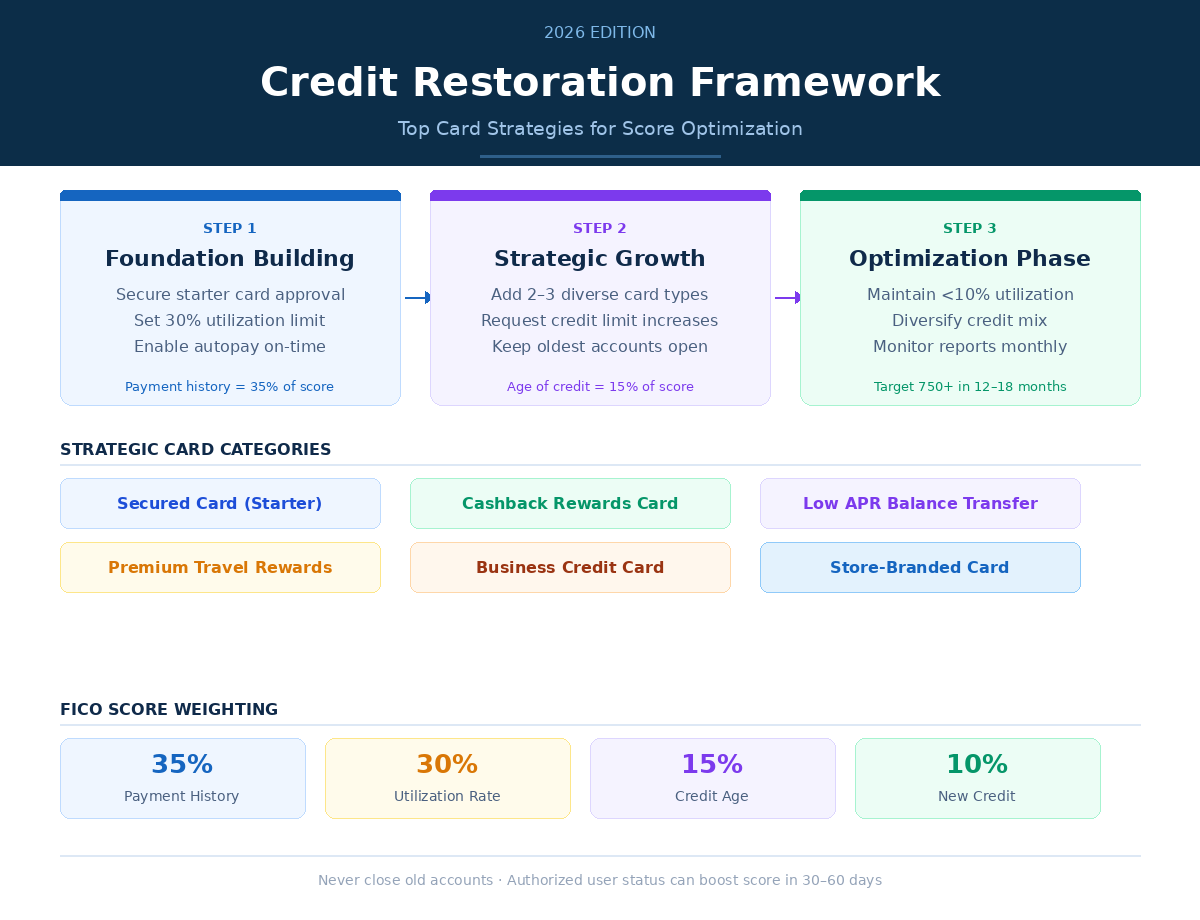
    The most significant change in 2026 is the 24-month lookback period. Unlike older models that only cared if you were current today, these modern frameworks analyze your trajectory. They look at whether your balances are rising or falling over time and, crucially, whether you are a “transactor” who pays in full or a “revolver” who carries debt. To optimize your score under this new regime, the top strategy is no longer just making on-time payments; it is demonstrating a consistent reduction in total utilization. Even if you cannot pay a balance in full, paying even twenty dollars above the minimum is now a positive “trend signal” that can boost your score more effectively than the old-school method of keeping a small balance to “show activity.”

    We must also address the complex reality of medical debt, which has seen a turbulent legal year. While the Consumer Financial Protection Bureau’s 2025 attempt to ban all medical debt from credit reports was vacated by federal courts, the “Big Three” bureaus—Equifax, Experian, and TransUnion—have maintained their voluntary commitment to exclude medical collections under $500 and all paid medical debts. For those looking to restore their credit today, the strategy is surgical: prioritize settling small medical bills first. Because anything under that $500 threshold vanishes from your report entirely, it offers the fastest “points-per-dollar” return on investment for score optimization.

    Furthermore, the rise of Buy Now, Pay Later (BNPL) services has finally reached a tipping point in 2026. While many providers like Afterpay and Zip still do not report routine “pay-in-four” transactions to the major bureaus, others like Affirm and Sezzle have expanded their reporting capabilities. If you are in the restoration phase, you must be selective. Using a BNPL service that doesn’t report on-time payments does nothing for your score, but a single missed payment can still be sent to collections and devastate your file. The 2026 framework suggests using “credit-builder” specific BNPL options only when they guarantee reporting to all three bureaus, effectively turning your everyday purchases into a structured installment loan.

    For non-citizens and “thin-file” borrowers, the clock is ticking. Following the executive order signed just two days ago on May 19, 2026, the use of Individual Taxpayer Identification Numbers (ITINs) is being reclassified as a banking “risk factor.” This means that the window for using an ITIN to secure a traditional credit card may begin to close as stricter verification requirements take effect this July. If you are currently building credit via an ITIN, the most effective strategy is to secure a card now and establish a solid payment history before the new guidance is fully implemented by lenders.

    Finally, we cannot ignore the macro-economic environment. With the Federal Funds Rate holding steady at 3.75% and average credit card APRs hovering near 19.4%, the cost of carrying debt is historically high. The “Credit Card Competition Act of 2026,” currently moving through Congress, aims to lower merchant swipe fees, but experts warn this could lead to a contraction in rewards programs and stricter approval or “limit-capping” algorithms. To stay ahead, focus on “limit preservation.” Avoid requesting high limit increases that trigger hard inquiries; instead, let the new trended scoring models naturally reflect your lower utilization, which often triggers automatic, soft-pull limit increases from issuers looking to retain low-risk borrowers.

    Optimizing your credit in 2026 is less about “hacking” the system and more about aligning with its new transparency. By understanding that your financial behavior over the last two years is now just as important as your behavior this morning, you can build a resilient framework that not only restores your score but secures your future in an increasingly data-driven economy.

  • The 2026 Portfolio Optimization Strategy: A Professional Framework for Mitigating Inflationary Risk

    The 2026 Portfolio Optimization Strategy: A Professional Framework for Mitigating Inflationary Risk

    As of May 21, 2026, the American investment landscape is navigating a uniquely complex intersection of geopolitical volatility, a leadership transition at the Federal Reserve, and the sweeping fiscal implications of the One Big Beautiful Bill Act (OBBBA). For professional investors and high-net-worth individuals, the 2026 portfolio optimization strategy is no longer just about chasing growth; it is a rigorous exercise in mitigating a “noisy” inflationary environment that has proven more persistent than many anticipated. With headline CPI recently jumping to 3.8% and some forecasts pointing toward a 4.2% peak this month, the traditional 60/40 portfolio is being stress-tested by a combination of soaring energy prices linked to the ongoing Iran conflict and the structural costs of the domestic AI infrastructure boom.

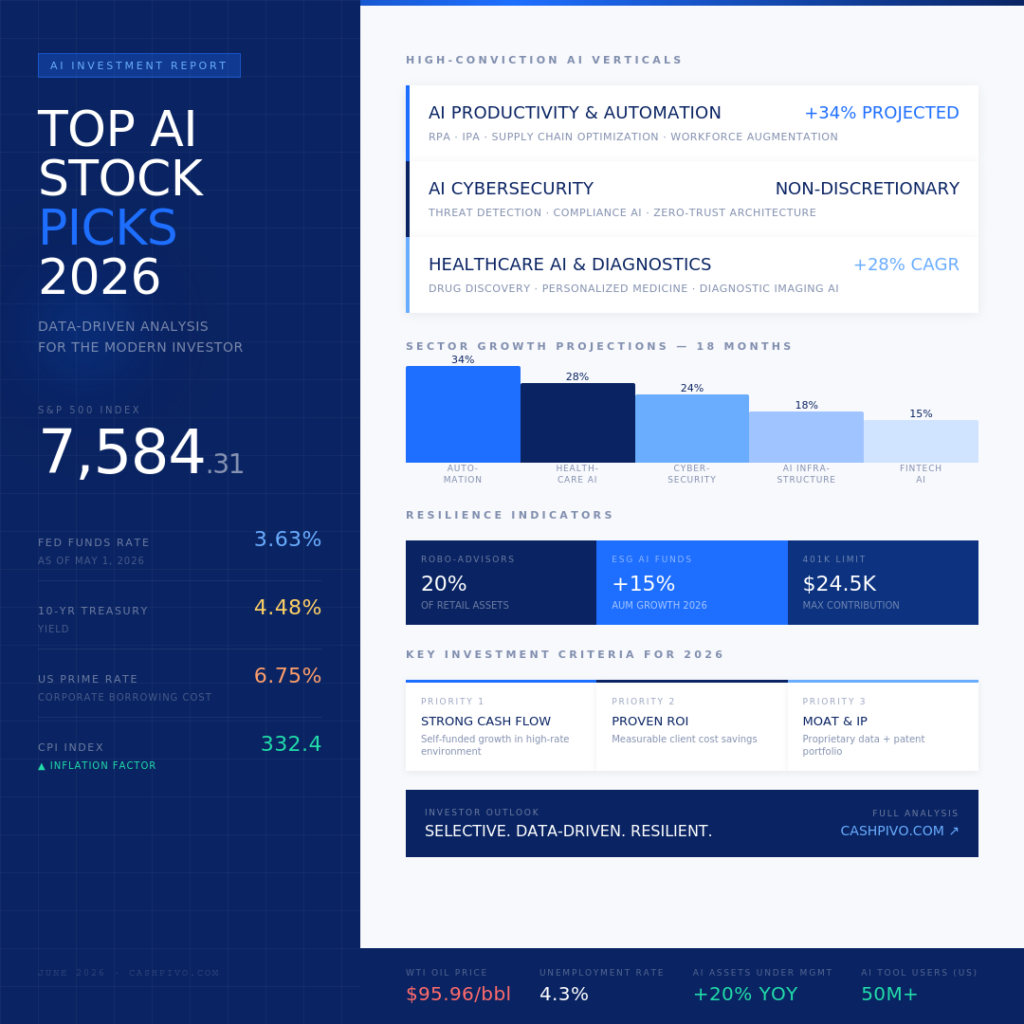
    The cornerstone of a professional framework in this environment begins with understanding the shift in monetary policy. With Kevin Warsh recently confirmed as the new Chair of the Federal Reserve, the market is bracing for a significant shift in central bank ideology. The Fed has held interest rates in the 3.5% to 3.75% range, but internal divisions are at their highest level in decades. For the 2026 investor, this means the “easing bias” of previous years has evaporated. Fixed-income strategies must now account for 10-year Treasury yields hovering near 4.37% and a compressed safety premium. Optimization today requires a lean toward shorter-duration assets and inflation-protected securities that can withstand the “wait-and-see” approach of a hawkish FOMC that is increasingly concerned about energy price passthrough into core PCE inflation, which currently sits at a stubborn 3.2%.

    Beyond monetary shifts, the 2026 framework must aggressively leverage the tax-efficiency tools provided by the OBBBA. This legislation has fundamentally altered the math of domestic investing. For instance, the permanent expansion of the standard deduction to $16,100 for single filers and $32,200 for joint returns, combined with the significant increase in the State and Local Tax (SALT) deduction limit to $40,400, offers a new buffer against the eroding effects of inflation on disposable income. Professional portfolios should also be optimized to reflect the new $24,500 contribution limits for 401(k) plans and the “Super” catch-up provisions for those aged 60 to 63, which now allow for an $11,250 annual boost. By maximizing these tax-deferred vehicles, investors can effectively lower their effective tax rate, creating a “synthetic” return that offsets the 3% to 4% inflation drag on nominal gains.

    Equity allocation in 2026 requires a surgical focus on the “AI-driven GDP” narrative. While the U.S. economy expanded at a 2.0% annualized rate in the first quarter, much of that growth was concentrated in intellectual property and information processing equipment. However, investors must be wary of the “3% threshold”—historical data suggests that when inflation exceeds 3%, real returns for the S&P 500 begin to diminish significantly. The framework for 2026 involves pivoting toward companies with high pricing power that can pass through the rising costs of computer components and energy without sacrificing margins. Additionally, the OBBBA’s decision to make Qualified Opportunity Zones (QOZ) permanent provides a critical long-term vehicle for deferring capital gains, offering a rare sanctuary for wealth preservation in a high-inflation era.

    Finally, the 2026 strategy must account for the “bifurcated consumer” and the new credit realities. With the recent executive orders aimed at restoring integrity to the financial system and the CFPB’s amendments to Regulation B, the lending environment is tightening. Investors should look toward the new federal income tax deduction for car loan interest—up to $10,000—as a niche but effective way to manage personal liabilities. In a world where the Iran conflict keeps Brent crude near $100 per barrel and supply chain distortions from tariffs are finally hitting the “inventory wall,” the most successful portfolios will be those that prioritize liquidity and tax-advantaged growth. By integrating these specific 2026 policy updates—from the Warsh-led Fed to the OBBBA’s senior bonus deductions—investors can build a framework that doesn’t just survive inflationary risk but actively capitalizes

  • The 2026 Index Fund Strategy: A Professional Framework for Decadal Wealth Optimization

    The 2026 Index Fund Strategy: A Professional Framework for Decadal Wealth Optimization

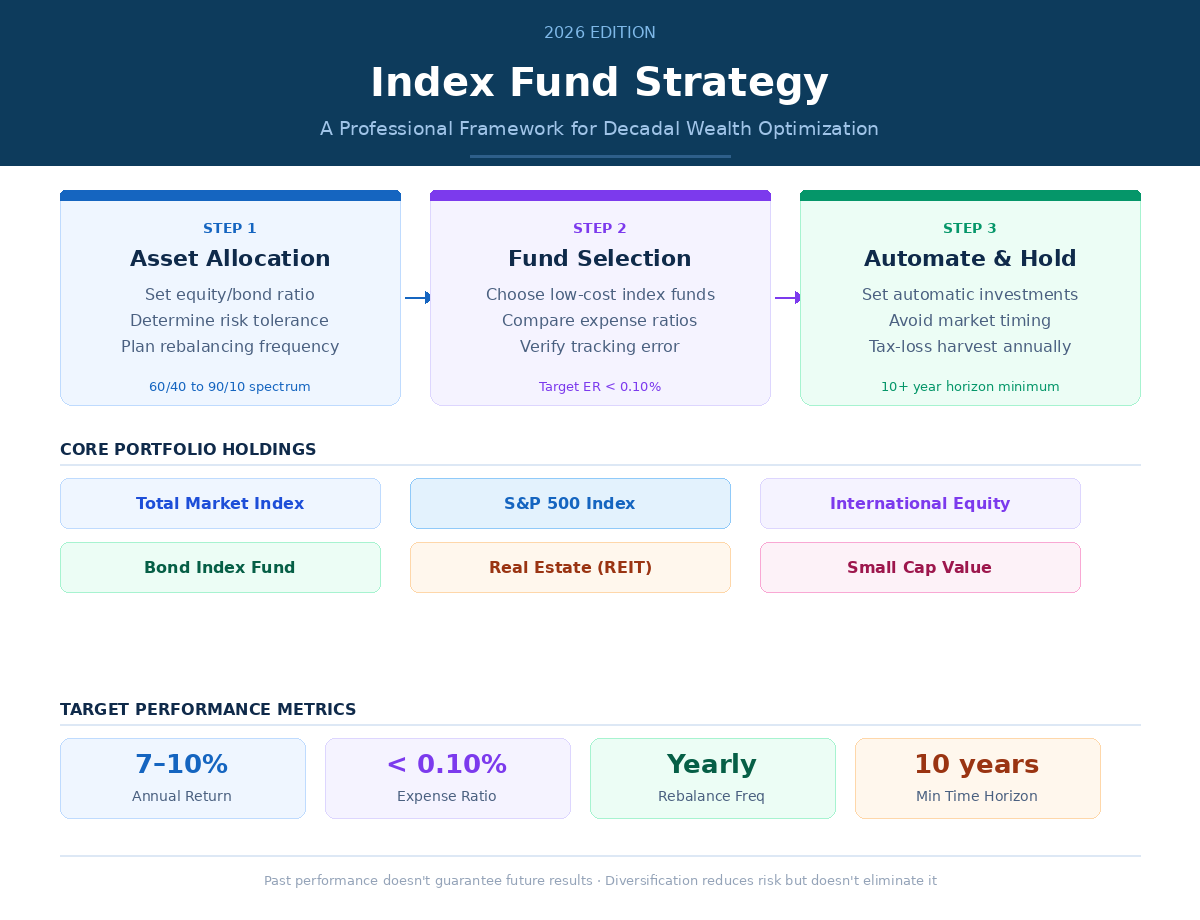
    As of May 21, 2026, the American financial landscape has reached a critical inflection point, demanding a more sophisticated approach to passive investing than the “set it and forget it” mantras of the previous decade. While the S&P 500 continues to show resilience, fueled by a massive $700 billion surge in artificial intelligence capital expenditures from the “Magnificent Seven,” the broader economic environment is shifting. With the Federal Reserve recently signaling a hawkish tilt in its May minutes—holding rates at 3.5% to 3.75% while warning of potential hikes to combat 3.8% inflation—investors must look beyond simple domestic large-cap exposure. Decadal wealth optimization in 2026 requires a professional framework that integrates the latest legislative shifts, specifically the permanent tax structures established by the One Big Beautiful Bill Act (OBBBA) and the evolving contribution limits for retirement vehicles.

    1. Maximizing Regulatory Thresholds and Tax Diversification

    The cornerstone of a 2026 strategy begins with maximizing the newly adjusted IRS contribution limits. For the current tax year, the individual 401(k) elective deferral limit has climbed to $24,500, while the IRA limit has reached $7,500. For professionals over 50, the catch-up provision now stands at $8,000.

    A critical regulatory shift from the SECURE 2.0 Act has finally taken full effect: if your 2025 earnings exceeded $150,000, these catch-up contributions must now be directed into Roth accounts. This “forced” tax diversification is a boon for decadal planning, as it builds a tax-free bucket of capital that hedges against potential future rate increases. By fully utilizing these higher thresholds, an investor can shield a significantly larger portion of their wealth from the 37% top marginal rate, which the OBBBA made permanent for those earning over $640,600.

    2. The “Barbell” Approach to Index Allocation

    While the AI-driven “melt-up” has pushed the S&P 500 toward a year-end target of 7,600, professional frameworks are increasingly adopting a “barbell” approach to index fund allocation:

    • Growth Core: Maintain exposure to technology-heavy growth indexes to capture the 40% of earnings growth currently driven by AI integration.
    • Strategic Rotation: Strategically rotate into undervalued sectors like energy and small-cap stocks. The S&P SmallCap 600 is currently projected to outperform large-caps over the next five years, provided the Fed navigates the “oil crunch” without a hard landing. Diversifying into a total market index or a dedicated small-cap fund like VIOO allows investors to capture the recovery of smaller firms disproportionately suppressed by the “higher-for-longer” interest rate environment.

    3. Tax Efficiency via Modern Tools

    Tax efficiency has evolved with the rise of direct indexing and the OBBBA’s revision of the SALT (State and Local Tax) deduction cap. For those in high-tax states, the SALT cap has been raised to $40,000 for households earning under $500,000, providing a significant reprieve.

    Sophisticated investors are moving away from traditional mutual funds in favor of ETFs and direct indexing strategies that allow for granular tax-loss harvesting. In 2026’s volatile market, marked by geopolitical tensions, harvesting losses in underperforming sectors while maintaining overall market beta can offset capital gains from high-performing tech sectors, effectively boosting net-of-tax returns by 1% to 2% annually.

    4. The Global Growth Hedge

    Finally, a professional framework for the late 2020s must account for global diversification. With the MSCI Emerging Markets index currently trading at a significant valuation discount compared to the U.S. market, the next decade of wealth optimization involves a heavier international tilt than the 2010s. As the U.S. economy grapples with energy price volatility, emerging markets offer a necessary growth hedge.

    Conclusion

    The 2026 strategy is not about abandoning the S&P 500; it is about recognizing that the “easy money” era has concluded. By combining aggressive retirement account utilization, a barbell allocation between growth and undervalued sectors, and granular tax-loss harvesting, investors can build a resilient portfolio capable of weathering the decade’s unique macroeconomic challenges.

  • The 2026 High-Ticket Affiliate Marketing Strategy: A Professional Framework for Scalable Success

    The 2026 High-Ticket Affiliate Marketing Strategy: A Professional Framework for Scalable Success

    The high-ticket affiliate marketing landscape in 2026 has evolved from a side hustle into a sophisticated professional discipline. As we navigate the mid-point of this year, the “get rich quick” schemes of the early 2020s have been replaced by a rigorous framework built on authority, transparency, and strategic financial management. For the modern US-based affiliate, success no longer hinges solely on traffic volume but on the ability to navigate a complex regulatory environment while providing genuine value in an economy defined by “higher-for-longer” interest rates and an AI-driven information boom.

    A professional framework for 2026 begins with a deep understanding of the current US financial and regulatory climate. The passage of the One Big Beautiful Bill Act (OBBBA) in late 2025 has fundamentally reshaped how digital creators manage their businesses. For instance, the restoration of 100% bonus depreciation under Section 168(k) is a significant boon for affiliates investing in high-end production equipment or AI-processing hardware. This allows you to immediately deduct the full cost of these assets in the year of purchase, providing a powerful lever for cash flow management. Furthermore, the IRS has clarified the reporting landscape by restoring the Form 1099-K threshold to over $20,000 and 200 transactions, a welcome relief from the previously proposed $600 rule that plagued smaller creators. However, this doesn’t exempt you from reporting every dollar of commission; with the 2026 standard deduction sitting at $16,100 for single filers, meticulous record-keeping on Schedule C remains the hallmark of a professional operation.

    Compliance is the second pillar of this scalable success framework. The Federal Trade Commission (FTC) has sharpened its focus on “clear and conspicuous” disclosures, particularly regarding AI-generated content and short-form video. In 2026, simply using a platform’s “Paid Partnership” tag is no longer sufficient. To avoid fines that now range between $51,744 and $53,088 per violation, your disclosures must appear “above the fold”—visible before the user engages with the content or clicks a link. This transparency isn’t just a legal hurdle; it is a trust-building mechanism. In an era where the Consumer Financial Protection Bureau (CFPB) has banned “preferencing” on comparison sites—prohibiting the ranking of products based solely on commission rates—the affiliates who win are those who prioritize consumer benefit over the highest payout.

    The economic backdrop of May 2026 also dictates a shift in how we sell. With the Federal Reserve holding interest rates in the 3.5% to 3.75% range and inflation hovering around 3.3%, American consumers are more discerning than ever. High-ticket items, often costing $2,500 or more, require a longer nurturing cycle. The successful 2026 strategy moves away from direct-to-offer ads and toward an “Authority-First” funnel. This involves using AI to analyze vast amounts of consumer data to create hyper-personalized educational content, which must be clearly disclosed as AI-assisted to remain compliant. By the time a prospect sees your affiliate link, they should view you as a consultant rather than a salesperson. This relationship-driven model is what allows for scalability; once you have established authority in a niche, your “cost per acquisition” drops as your “lifetime value” as a trusted recommender grows.

    Scalability in this professional framework is achieved through the ethical integration of generative AI. While the FTC is watching for deceptive AI endorsements, the smart affiliate uses these tools for the “operational layer”—automating email sequences, optimizing SEO metadata, and personalizing lead magnets at scale. The goal is to use technology to handle the volume while the human creator focuses on the “E-E-A-T” (Experience, Expertise, Authoritativeness, and Trustworthiness) that search engines and consumers demand. As the US economy continues to be bolstered by AI-related business investments, aligning your affiliate portfolio with technology, sustainable energy, or specialized financial services can position you in high-growth sectors that are less sensitive to the current interest rate environment.

    Ultimately, the 2026 high-ticket affiliate marketing strategy is about treating your digital presence as a legitimate enterprise. This means staying ahead of the OBBBA tax updates, maintaining rigorous FTC compliance, and understanding the macroeconomic pressures on your audience. By combining 100% bonus depreciation on your tools with a “Value-First” content strategy, you create a business that is not only profitable but also resilient. In this professionalized era, the greatest asset you own is not your email list or your social following, but your reputation for integrity in a crowded digital marketplace. Success is no longer about finding the right “hack”; it is about executing a disciplined framework that respects both the law and the consumer.

  • The 2026 Car Loan Refinancing Strategy: A Professional Framework for Monthly Payment Optimization

    The 2026 Car Loan Refinancing Strategy: A Professional Framework for Monthly Payment Optimization

    As we navigate the financial landscape of May 2026, the American automotive market finds itself at a critical crossroads. With the Federal Reserve recently holding the benchmark interest rate steady at a range of 3.5% to 3.75% following the April FOMC meeting, many vehicle owners are looking for a reprieve from the record-high monthly payments that defined the last two years. While the “wait-and-see” approach of the central bank has stabilized the market, the shadow of sticky inflation—currently sitting at a 3.8% annual rate—and the energy price volatility stemming from the ongoing conflict in Iran suggest that the window for optimizing your auto debt may be narrower than previously anticipated. For the professional borrower, the 2026 car loan refinancing strategy is no longer just about chasing a lower number; it is a sophisticated framework of timing, regulatory leverage, and term management designed to reclaim monthly cash flow without sacrificing long-term equity.

    The first pillar of this framework involves a precise assessment of the current interest rate environment against your personal credit trajectory. As of late May 2026, average new car loan rates are hovering around 6.7%, while used car rates remain slightly more elevated near 7.1% for those with excellent credit. If you secured a loan during the peak volatility of 2024 or 2025, when rates were significantly higher, a refinance today could yield a reduction of 1.5% to 2% in your APR. However, the strategy requires more than just a market dip. With the recent implementation of the 2025 budget reconciliation incentives—often referred to as the “One Big Beautiful Bill”—and the surge in AI-driven capital investment, the broader economy is showing a resilience that may actually prompt the Fed to consider a “hawkish” hike later this year. Consequently, the professional move is to lock in a refinance now, before the potential July rate adjustments, particularly if your credit score has migrated into the “Excellent” (800+) tier, where the most competitive 6.81% offers currently reside.

    Beyond the macroeconomics, the 2026 strategy leverages a powerful new regulatory shield: the Combating Auto Retail Scams (CARS) Act. Although the full weight of the CARS Act’s enforcement takes effect this October, its influence is already being felt across the lending sector. This legislation, alongside state-level protections like New York’s FAIR Business Practices Act, has fundamentally changed the transparency requirements for auto financing. When you approach a lender for a refinance today, you have the legal right to a clear, conspicuous disclosure of the total price and the elimination of “junk fees”—those hidden add-ons for products like nitrogen-filled tires or redundant gap insurance that often bloated original loan balances. A successful 2026 refinance involves auditing your current loan for these predatory costs and ensuring your new contract is lean. This is the “optimization” phase where you aren’t just lowering the interest rate, but actively shrinking the principal by refusing to carry over legacy fees into the new agreement.

    The final component of a professional framework is the strategic management of the loan term. We are currently seeing an all-time high of 22.9% of buyers stretching their loans over 84 months to manage the $773 average monthly payment for new vehicles. While a longer term can provide immediate breathing room for your monthly budget, it is a dangerous trap in a 2026 market where vehicle depreciation remains unpredictable due to the rapid evolution of hybrid and AI-integrated models. The professional strategy for 2026 is to “refinance down” the term whenever possible. If you can secure a rate reduction of at least 1.5%, aim to keep your remaining term the same or even shorten it. This ensures that the interest savings go toward building equity rather than merely delaying the inevitable. By aligning your refinance with

  • The Employer Match Strategy: Optimizing Your 401k for an Accelerated Retirement Timelin

    The Employer Match Strategy: Optimizing Your 401k for an Accelerated Retirement Timelin

    The landscape of American retirement planning is shifting beneath our feet in 2026, offering savvy investors a rare window to accelerate their exit from the workforce. At the heart of this transformation is the employer match—a benefit often dismissed as a standard perk but which, when optimized under the latest IRS regulations, serves as a high-octane fuel for your retirement engine. As we navigate the current fiscal year, understanding how to leverage the SECURE 2.0 Act’s newest provisions is no longer optional for those aiming for an early or more affluent retirement; it is the baseline for financial success.

    For 2026, the Internal Revenue Service has adjusted contribution limits upward to account for the evolving economic climate, setting the individual 401(k) contribution cap at $24,500. While this $1,000 increase over the previous year may seem incremental, its true power is unlocked when paired with the employer match. Most U.S. companies now offer a match ranging between 4% and 6% of an employee’s salary. In a market where every percentage point of growth matters, failing to contribute enough to capture the full match is effectively leaving a 100% immediate return on investment on the table. To accelerate your timeline, your first strategic move must be “matching the match” before allocating a single dollar elsewhere.

    The strategy becomes even more potent for those in the “red zone” of their careers. A standout feature of 2026 is the full implementation of the “super catch-up” contribution. While the standard catch-up limit for those aged 50 and older has risen to $8,000—bringing their total potential deferral to $32,500—a special provision now allows workers aged 60, 61, 62, and 63 to contribute a staggering $11,250 in catch-up funds. This means individuals in this specific age bracket can shield up to $35,750 of their income from taxes while significantly boosting their account balance just years before retirement. When you factor in the total limit for combined employee and employer contributions, which has climbed to $72,000 for 2026 (and up to $83,250 for those utilizing the super catch-up), the potential for rapid wealth accumulation is unprecedented.

    However, 2026 also introduces a critical pivot for high earners that requires immediate attention. Under the new “Roth catch-up” mandate, any participant who earned more than $150,000 in the prior calendar year must now make their catch-up contributions on a Roth (after-tax) basis. While this removes the immediate tax deduction, it strategically positions you for a tax-free retirement. By paying the tax now at today’s known rates, you protect your future self from potentially higher tax brackets decades down the line. Furthermore, more employers are now taking advantage of the option to provide matching contributions directly into a Roth 401(k) account. This shift toward “Rothification” is a gift for the accelerated retirement seeker, as it builds a massive pool of tax-free liquidity that can be accessed without triggering the heavy tax bills that often plague traditional 401(k) withdrawals.

    To truly optimize your 401(k) for an accelerated timeline, you must look beyond the contribution screen and into the vesting schedule. In 2026, we are seeing a trend toward “immediate vesting” as companies compete for top-tier talent. If your employer still utilizes a graded vesting schedule, your retirement “acceleration” is tethered to your tenure. Understanding exactly when those employer dollars become yours is vital when considering a career move or early retirement. If you are 80% vested and planning to leave, staying just a few more months to hit 100% could mean a five-figure difference in your ending balance.

    Ultimately, the employer match strategy in 2026 is about precision. It is about ensuring you hit the $24,500 individual limit, maximizing the $11,250 super catch-up if eligible, and embracing the Roth transition to lock in tax-free growth. By treating your 401(k) as a dynamic tool rather than a static savings account, you aren’t just preparing for a distant future; you are actively pulling that retirement date closer to the present. The math is clear: those who master the match and the new 2026 limits will find themselves crossing the finish line years ahead of their peers.