As of May 21, 2026, the American grocery landscape has reached a critical inflection point where passive saving is no longer sufficient for the average household budget. With recent Labor Department data showing grocery prices climbing 0.7% in April alone and year-over-year food-at-home inflation projected to hit 4.5% by year-end, the “Strategic Framework” for cash back has evolved from a casual hobby into a sophisticated financial necessity. Driven by rising fuel and fertilizer costs linked to ongoing global supply chain disruptions, the modern shopper must navigate a complex ecosystem of high-yield credit cards, digital stacking protocols, and a shifting regulatory environment that threatens the very existence of the rewards we have come to rely on.
The foundation of any 2026 grocery strategy remains the high-yield credit card, but the definitions of “value” have shifted. The American Express Blue Cash Preferred continues to lead the market with its 6% cash back at U.S. supermarkets, though its $6,000 annual cap is increasingly easy to hit given today’s inflated basket prices. For larger households, the American Express Gold Card has become the preferred workhorse, offering 4x Membership Rewards points on up to $25,000 in annual spending. While its annual fee has climbed to $325, the integration of new monthly credits for brands like Dunkin’ and Resy allows disciplined users to offset the cost entirely. However, the most significant tactical shift in 2026 is the “Superstore Pivot.” Because traditional high-yield cards often exclude giants like Walmart and Target from their “supermarket” definitions, savvy shoppers are increasingly utilizing the Citi Custom Cash Card to secure 5% back on their top spending category or the Amazon Prime Visa for a flat 5% at Whole Foods and Amazon Fresh, which remains the gold standard for the growing demographic of online-first grocery buyers.
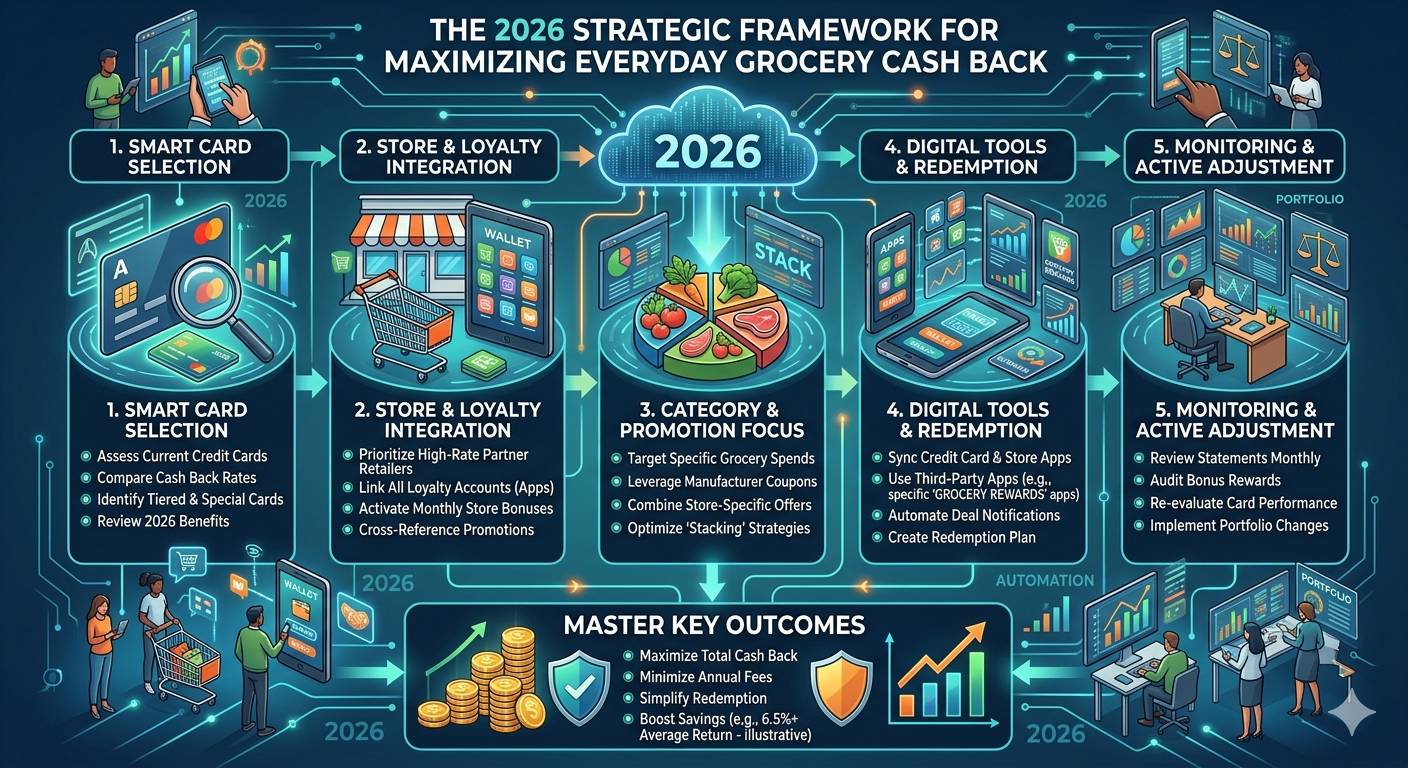
Beyond the plastic in your wallet, the 2026 framework requires a rigorous “stacking” protocol. This involves the synchronized use of receipt-scanning technology and merchant-specific loyalty programs. Apps like Ibotta and Fetch have matured into AI-driven platforms that offer personalized “boosts” based on real-time inventory levels at local retailers. By activating these offers before a trip and paying with a category-specific credit card, it is now possible to achieve an effective rebate of 10% to 12% on a single trip. This is particularly effective when combined with the resurgence of private-label brands, which now command nearly a quarter of the total unit share in the U.S. market. Shoppers are no longer viewing store brands as a compromise but as a strategic component of a value-driven lifestyle, often yielding higher app-based rewards than their national-brand counterparts.
Perhaps the most critical development for US readers to monitor this month is the legislative pressure mounting in Washington. The reintroduction of the Credit Card Competition Act of 2026 has sent ripples through the financial sector. This bipartisan bill aims to mandate routing competition for credit card transactions to lower the “swipe fees” paid by merchants. While proponents argue this will lower prices at the register, the banking industry has warned that such a shift could decimate the funding for the very cash-back programs we use to combat inflation. Simultaneously, the Consumer Financial Protection Bureau (CFPB) has intensified its scrutiny of “bait-and-switch” rewards tactics. Their latest circular warns issuers against devaluing earned points or hiding redemption hurdles in fine print. For the consumer, this means that while your current rewards are more protected by federal oversight than ever before, their long-term sustainability is tied to the outcome of this summer’s Congressional sessions.
To maximize returns in this volatile environment, the 2026 framework suggests a “three-card rotation” system. Use a dedicated 5-6% card for traditional grocers, a store-branded card for wholesale clubs or superstores, and a high-base-rate card for everything else. This must be paired with a weekly audit of digital coupons, as retailers have moved away from paper circulars in favor of “just-in-time” app discounts that expire within hours. As we move into the second half of 2026, the difference between a casual shopper and a strategic one is no longer measured in cents, but in thousands of dollars of annual purchasing power. By treating grocery spending as a managed financial portfolio—diversifying where you shop, stacking your rewards, and staying informed on federal policy—you can effectively insulate your household from the sting of the modern checkout line.