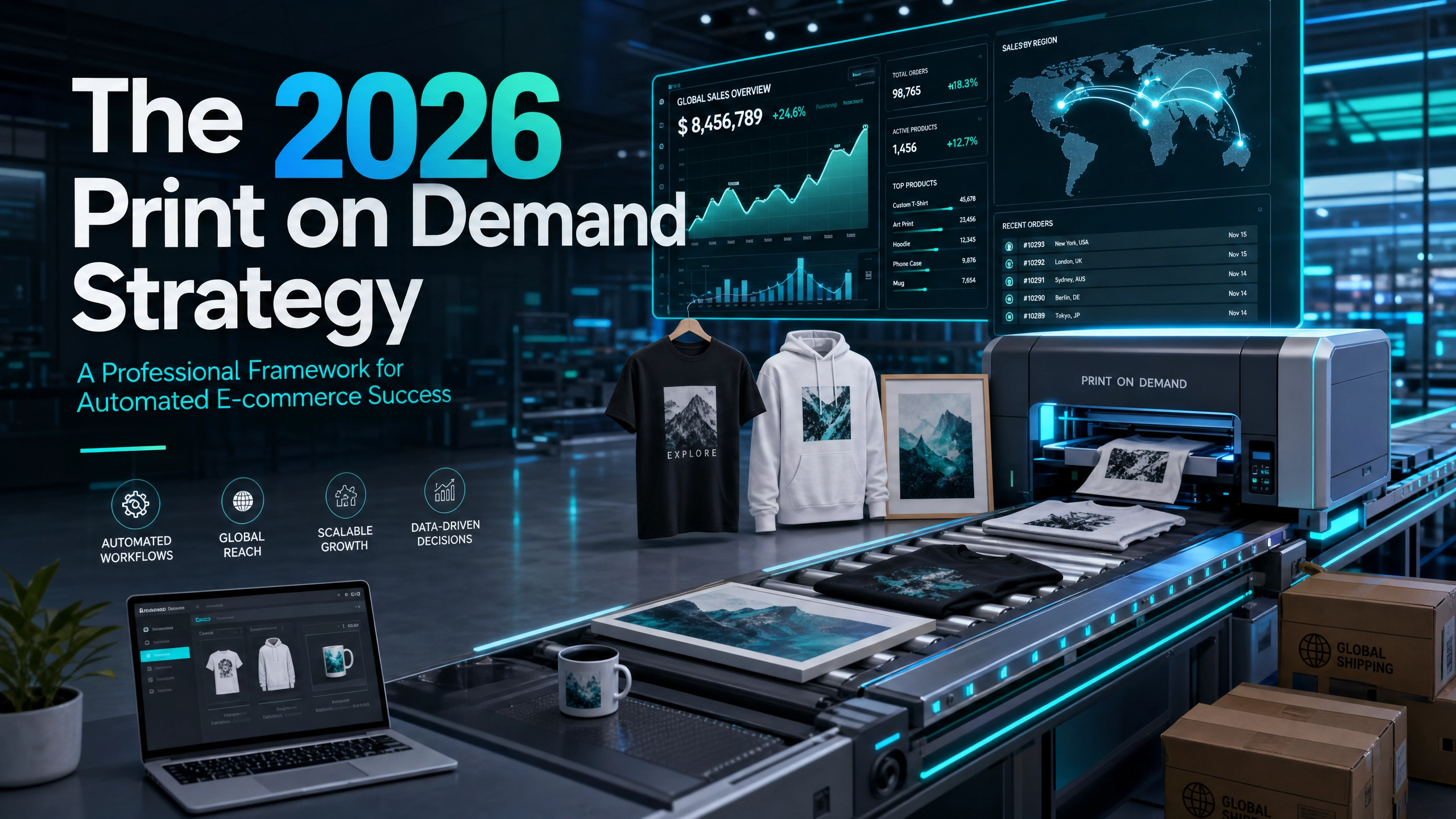
The landscape of e-commerce has undergone a seismic shift as we move through the second quarter of 2026. For the modern entrepreneur, the “side hustle” era of print on demand has matured into a sophisticated, automated enterprise model. Success in today’s market is no longer about simply uploading a design to a marketplace and hoping for the best; it requires a professional framework that integrates predictive technology with a keen understanding of the current American economic climate. As of May 2026, the United States is navigating a complex financial period characterized by a 3.8% annual inflation rate and a Federal Reserve that has held interest rates steady at approximately 3.6%. While energy costs have seen a sharp 17.9% increase due to ongoing global tensions, the regulatory environment for small businesses has actually become more favorable, providing a unique window of opportunity for those who can execute with precision.
The most significant tailwind for print on demand professionals this year is the recent passage of the One Big Beautiful Bill Act, which has fundamentally reshaped the tax reporting landscape. In a major win for online sellers, the federal 1099-K reporting threshold has been officially restored to $20,000 and 200 transactions, effectively repealing the much-debated $600 limit. This change, combined with the permanency of the 20% Small Business Deduction, allows entrepreneurs to reinvest more of their gross margins back into the automation tools that drive growth. However, with core inflation remaining “sticky,” the 2026 strategy must prioritize high-margin, premium products over the race-to-the-bottom pricing models of the past.
A professional framework for 2026 begins with the integration of agentic AI into the design and research workflow. We have moved beyond basic generative prompts; the current gold standard involves deploying autonomous AI agents that monitor real-time social sentiment and predictive search data to identify micro-niches before they peak. By the time a trend hits the mainstream, a professional POD system has already generated brand-consistent assets and synced them across multiple sales channels. This proactive approach mitigates the risks associated with rising customer acquisition costs, ensuring that your marketing spend is directed toward high-intent audiences.
Logistics and fulfillment have also become a primary differentiator in 2026. With gasoline and fuel oil prices seeing significant volatility this spring, the reliance on long-haul, international shipping is no longer a viable strategy for automated success. The professional framework now dictates a localized fulfillment model. By partnering with providers that utilize distributed manufacturing hubs across the U.S., sellers can offer the lightning-fast shipping speeds that American consumers now demand while insulating their profit margins from fluctuating trans-Pacific freight costs. This “local-first” automation not only reduces the carbon footprint—a key selling point for the 2026 consumer—but also minimizes the “real average weekly earnings” squeeze that many shoppers are currently feeling by keeping final delivery costs predictable.
Furthermore, the 2026 strategy leverages the “Social Commerce 3.0” ecosystem. Platforms like TikTok Shop and YouTube Shopping have moved from experimental features to primary revenue drivers. A professional framework automates the bridge between these social storefronts and your POD backend, ensuring that a viral moment translates into immediate, error-free fulfillment. This year, the focus is on “shoppable entertainment,” where the automation handles the inventory-less supply chain, allowing the business owner to focus on high-level brand storytelling and community engagement.
Compliance and financial hygiene have also taken center stage. With the 1099-NEC threshold rising to $2,000 this year, and new CFPB rules refining the definition of a small business, maintaining a clean digital paper trail is non-negotiable. The most successful operators are using automated bookkeeping integrations that reconcile every transaction in real-time, providing the data needed to navigate a “restrictive” monetary environment where access to traditional credit remains tight. By treating your print on demand venture as a high-tech logistics firm rather than a hobby, you position yourself to capitalize on the resilience of American private domestic demand.
Ultimately, the 2026 print on demand framework is built on the pillars of regulatory relief, agentic AI, and localized logistics. While the broader economy faces headwinds from energy shocks and persistent inflation, the e-commerce sector continues to expand at a steady 2.0% GDP growth rate. For the professional who can automate the intersection of design, data, and delivery, the current environment offers a rare chance to build a scalable, resilient brand. The goal is no longer just passive income; it is the creation of an automated, professional system that thrives on the very volatility that once sidelined the casual seller. Success this year belongs to those who view these economic shifts not as obstacles, but as the blueprint for a more efficient, more profitable future.
Leave a Reply