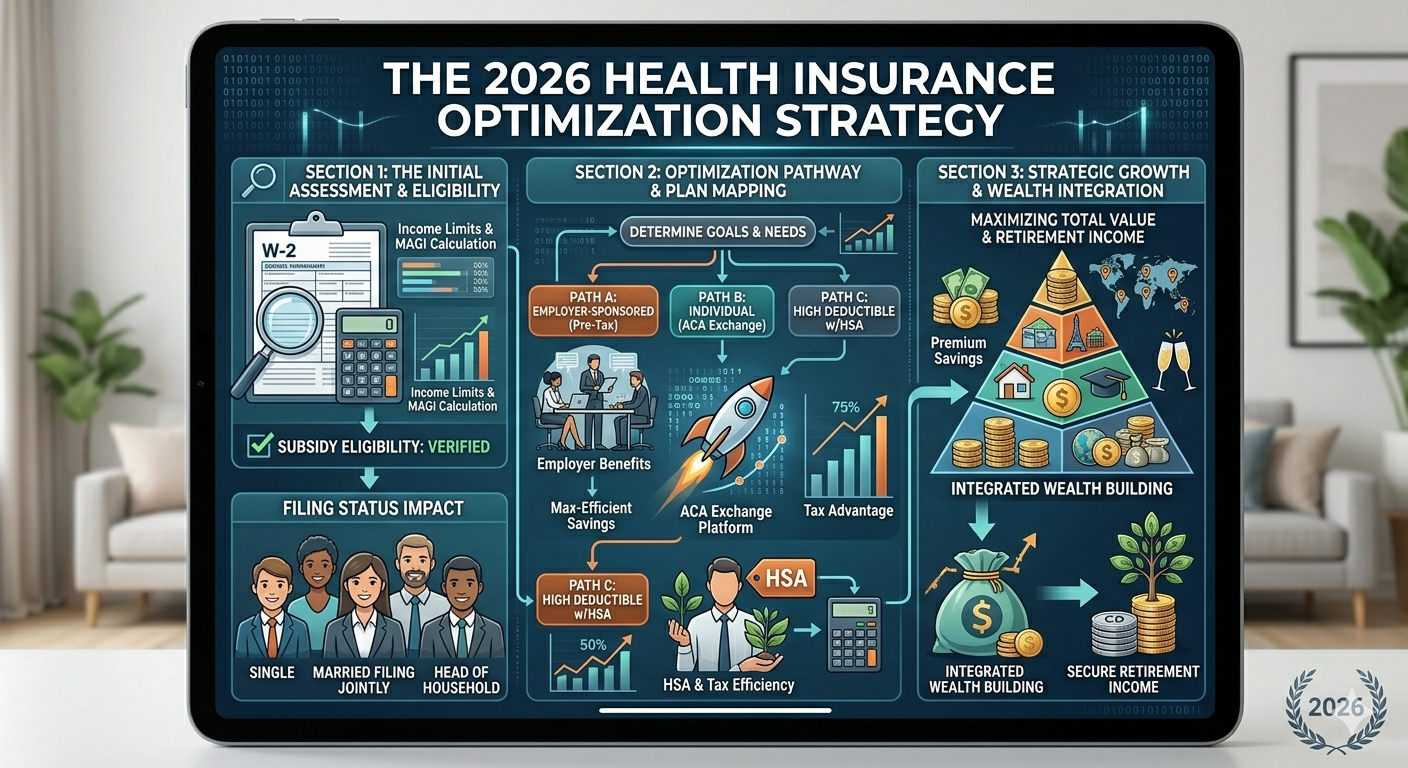
Navigating the American healthcare landscape in 2026 requires more than just a cursory glance at a provider directory; it demands a sophisticated financial strategy. As of May 2026, the expiration of the enhanced premium tax credits—originally introduced during the pandemic and extended through 2025—has created a seismic shift in how much the average household pays for coverage. For many, the “subsidy cliff” has returned with a vengeance, meaning that earning even a dollar over 400% of the Federal Poverty Level can result in a total loss of financial assistance. However, by understanding the latest legislative shifts, such as the Working Families Tax Cut and the new HSA eligibility rules, you can legally and effectively drive your monthly premiums down to manageable levels.
The most potent weapon in your 2026 health insurance arsenal is the strategic management of your Modified Adjusted Gross Income, or MAGI. Because ACA subsidies are strictly tied to this number, reducing your taxable income can be the difference between a $200 monthly premium and a $1,200 one. For the 2026 tax year, the IRS has increased Health Savings Account contribution limits to $4,400 for individuals and $8,750 for families, with an additional $1,000 catch-up for those aged 55 and older. By maximizing these contributions, you aren’t just saving for future medical needs; you are actively lowering the income figure the government uses to calculate your subsidy eligibility. When combined with pre-tax contributions to 401(k) or traditional IRA accounts, many middle-class families can effectively “buy back” their subsidies by sliding just under the eligibility threshold.
A major breakthrough for 2026 is the universal expansion of HSA-eligible plans. Under the recent Working Families Tax Cut legislation, the federal government has mandated that all Bronze and Catastrophic plans on the Marketplace are now HSA-compatible. Previously, many of these low-premium options did not allow for tax-advantaged savings, forcing consumers to choose between a low monthly bill and a tax break. Now, you can opt for a high-deductible Bronze plan to keep your fixed monthly costs at their absolute minimum while using the HSA to pay for out-of-pocket expenses with tax-free dollars. This “Bronze-plus-HSA” strategy is particularly effective for 2026, as average silver plan premiums have surged by nearly 30% in many states following the sunset of enhanced federal funding.
Beyond the Marketplace, the 2026 strategy involves leveraging new transparency tools and prescription drug initiatives. The expansion of TrumpRx.gov has introduced a centralized platform where patients can access more than 600 generic medicines at cash prices that often undercut insurance copays. In many cases, it is now cheaper to pay the “cash price” for maintenance medications than to run them through a high-deductible insurance plan. Furthermore, the Inflation Reduction Act’s provisions have finally capped out-of-pocket drug costs for seniors and negotiated lower prices for several high-cost specialty drugs, providing much-needed relief for those on Medicare Part D. For those under 65, the key is to use these transparency tools to “unbundle” your care—using insurance only for catastrophic protection while paying cash for routine prescriptions and lab work.
For individuals who find themselves completely priced out of traditional ACA plans, 2026 has seen a rise in alternative models like Direct Primary Care (DPC) and medical cost-sharing communities. While these are not traditional insurance, they are increasingly being used in tandem with high-deductible “wrap-around” catastrophic plans. A DPC membership typically costs between $60 and $100 a month and provides unlimited access to a primary doctor, which can prevent the need for expensive urgent care visits that would otherwise be subject to a high deductible. When paired with a multi-year catastrophic plan—now allowed for up to 10 consecutive years under recent CMS rule changes—this hybrid approach can provide a safety net at a fraction of the cost of a traditional Gold or Silver plan.
As we look toward the 2027 plan year, there is a glimmer of hope on the horizon. The Centers for Medicare & Medicaid Services (CMS) recently finalized a rule to lower federal exchange user fees, which is expected to put downward pressure on premiums starting next January. However, for the remainder of 2026, the burden of cost-control lies with the consumer. The “Great Healthcare Plan” initiatives currently being rolled out emphasize direct-to-consumer funding and price transparency, but they require an active participant to reap the rewards. By auditing your current plan, maximizing your HSA, and utilizing cash-pay platforms for prescriptions, you can navigate the 2026 premium surge without sacrificing the quality of your care or the stability of your bank account. Proactive income planning today is the most effective way to ensure that your health insurance remains a tool for protection rather than a source of financial strain.
Leave a Reply