• The 2026 Newsletter Monetization Framework: Advanced Strategies for Sustainable Revenue Optimization

    The 2026 Newsletter Monetization Framework: Advanced Strategies for Sustainable Revenue Optimization

    As of May 21, 2026, the landscape for newsletter monetization has shifted from a wild-west gold rush into a sophisticated, highly regulated professional ecosystem. For creators and media entrepreneurs in the United States, the “2026 Framework” for sustainable revenue is no longer just about growing an email list; it is about navigating a complex intersection of new federal tax laws, evolving consumer protection mandates, and a revitalized fintech environment. Success this year requires a dual mastery of high-value content and the administrative rigor demanded by the landmark legislation passed over the last eighteen months.

    The most significant shift for the mid-tier creator comes from the One Big Beautiful Bill Act (OBBBA), which officially stabilized the digital economy in late 2025. For those who remember the years of confusion surrounding the 1099-K reporting thresholds, the current environment offers a much-needed reprieve. The permanent restoration of the $20,000 and 200-transaction threshold for third-party payment processors like Stripe and PayPal has removed a massive administrative burden for emerging newsletters. However, this does not mean record-keeping is any less vital. With the 1099-NEC and 1099-MISC thresholds now sitting at $2,000, newsletter operators must be more diligent than ever in tracking direct brand sponsorships and affiliate payouts. The OBBBA also brought a major victory for creators who develop their own proprietary tools or software-driven delivery systems: the return to 100% immediate expensing for domestic research and experimental expenditures under Section 174. This allows you to fully deduct the costs of developing custom automation or AI-driven personalization engines in the year they are incurred, providing a powerful incentive to move away from off-the-shelf platforms and toward owned infrastructure.

    Monetization in 2026 also demands a “compliance-first” approach to sponsorship. The Federal Trade Commission has significantly ramped up enforcement this spring, particularly following the March 2026 Advance Notice of Proposed Rulemaking aimed at reviving the “Click-to-Cancel” rule. While the 2024 version of the rule faced a temporary setback in the courts, the FTC’s current trajectory makes it clear that “simple mechanisms” for subscription cancellation are now a non-negotiable standard for any newsletter charging a recurring fee. Furthermore, the days of relying solely on a platform’s built-in “Paid Partnership” tag are over. Current enforcement trends show that the FTC now views platform tags as insufficient on their own. To avoid fines that currently range between $51,000 and $53,000 per violation, creators must include clear, “above the fold” disclosures—such as a prominent #ad or “Sponsored by”—within the first few lines of the newsletter. This transparency is no longer just a legal hurdle; it has become a cornerstone of audience trust in an era where 78% of US consumers report that immediate disclosure increases their likelihood of engaging with a recommendation.

    Beyond taxes and transparency, the 2026 framework leverages the rapid integration of fintech into traditional publishing. Just this week, the signing of the Executive Order on Integrating Financial Technology Innovation into Regulatory Frameworks has signaled a new era for how newsletters handle transactions. This order, combined with the earlier establishment of the Strategic Bitcoin Reserve in 2025, is beginning to lower the barriers for creators to accept a wider variety of digital assets and stablecoins with reduced transaction friction. For newsletter owners, this means the ability to bypass traditional banking delays and high merchant fees, particularly for international subscribers. By adopting these streamlined payment systems, creators can capture a higher percentage of their gross revenue while offering subscribers more flexible ways to pay.

    Finally, sustainable revenue optimization in 2026 relies on maximizing the permanent Qualified Business Income (QBI) deduction under Section 19
  • The Legacy Protection Framework: A Strategic Method for Establishing a Legally Sound Family Living Trust

    The Legacy Protection Framework: A Strategic Method for Establishing a Legally Sound Family Living Trust

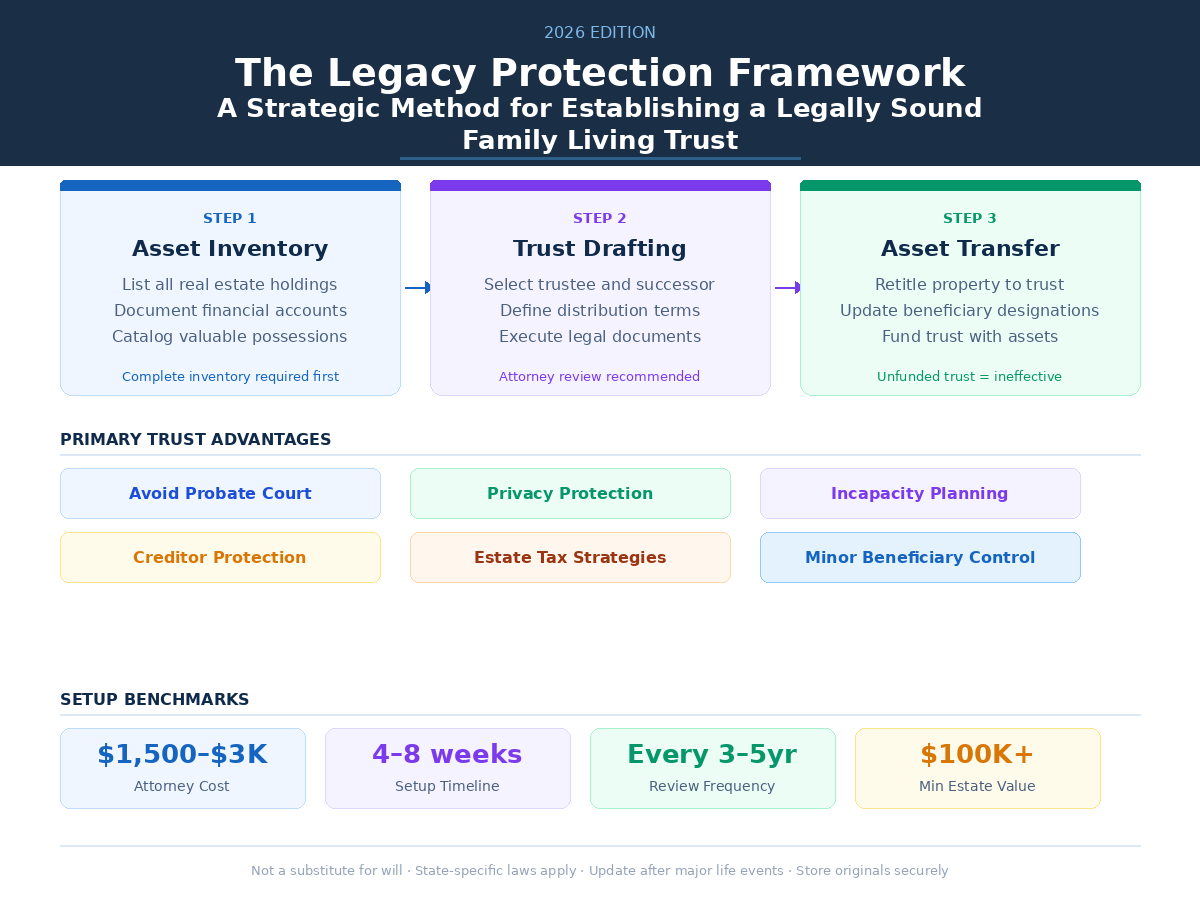
    In the rapidly evolving financial landscape of 2026, the concept of a legacy has shifted from a static inheritance to a dynamic, protected continuum. For many American families, the recent passage of the One Big Beautiful Bill Act (OBBBA) has redefined the boundaries of wealth transfer, replacing the long-feared “tax cliff” of the previous decade with a robust, permanent federal estate tax exemption of $15 million per individual. While this $30 million threshold for married couples offers unprecedented breathing room, it has also birthed a new era of complexity. Establishing a legally sound family living trust is no longer just about avoiding probate; it is about implementing a Legacy Protection Framework—a strategic, multi-layered method designed to navigate modern tax codes, privacy concerns, and the intricate rules of the SECURE Act 2.0.

    The foundation of this framework begins with understanding that a living trust is a living entity, not a “set it and forget it” document. As of May 2026, the most successful estate plans are those that integrate the elevated federal exemptions with the reality of state-level nuances. While the federal government has signaled stability, several states continue to enforce their own estate or inheritance taxes with much lower thresholds. For instance, residents in states like New York must still contend with the “tax cliff,” where exceeding the state exemption by even a small margin can trigger a tax on the entire estate. A strategic Legacy Protection Framework accounts for these geographic discrepancies by utilizing formula funding clauses that automatically adjust based on the current year’s state and federal limits, ensuring that no family is blindsided by a localized tax bill.

    Beyond tax mitigation, the framework emphasizes the critical importance of trust funding—a step where many well-intentioned plans fail. A trust is essentially an empty vessel until it is “funded” with assets. In 2026, this process involves more than just retitling real estate or bank accounts; it requires a meticulous audit of digital assets, intellectual property, and increasingly common cryptocurrency holdings. Under the current legal standards, failure to properly transfer these assets into the name of the trust can leave them vulnerable to the very probate process the trust was designed to bypass. By systematically aligning every asset with the trust’s structure, the Legacy Protection Framework ensures that the transition of wealth is seamless, private, and immediate upon the grantor’s passing.

    The integration of retirement planning into the family trust has also become a focal point this year, particularly with the SECURE Act 2.0 provisions now fully in effect. With the required minimum distribution (RMD) age having climbed to 73 for those born between 1951 and 1959, and 75 for those born in 1960 or later, the timing of wealth depletion has changed. A legally sound trust must now be drafted as a “see-through” or “conduit” trust to handle inherited IRAs properly. Without these specific legal designations, beneficiaries may be forced to withdraw the entirety of an inherited retirement account within ten years, potentially pushing them into the highest possible income tax bracket. The Legacy Protection Framework coordinates the trust’s distribution language with these RMD timelines, allowing for tax-deferred growth to continue for as long as the law allows.

    Furthermore, the 2026 landscape has seen a significant rise in the use of annual gift tax exclusions as a proactive tool within the trust framework. With the current exclusion set at $19,000 per recipient—or $38,000 for married couples—families are increasingly using “Crummey” powers to fund irrevocable life insurance trusts or educational sub-trusts without tapping into their lifetime $15 million exemption. This strategy allows for the “shaving” of an estate’s value over time, moving future appreciation out of the taxable estate while providing immediate benefits to children and grandchildren. It is a proactive approach that transforms the trust from a death-benefit vehicle into a lifetime wealth-management tool.

    As we look at the current trends, it is also impossible to ignore the role of technology in establishing these frameworks. While 2026 has seen a 30% increase in Americans trusting AI-driven advice for initial estate drafting, the most legally sound trusts remain those vetted by human expertise to ensure compliance with the specific fiduciary standards of each jurisdiction. A strategic method involves using modern digital tools for asset tracking and communication while relying on professional legal counsel to navigate the “gray areas” of trust law, such as decanting or the appointment of independent trust protectors.

    Ultimately, the Legacy Protection Framework is about more than just numbers on a ledger; it is about the preservation of family values and the prevention of conflict. By clearly defining the roles of successor trustees and providing specific guidance on discretionary distributions, a family living trust acts as a roadmap for future generations. In an era where financial policies can shift with the stroke of a pen, the most enduring legacy is one built on a foundation of strategic foresight, rigorous legal compliance, and a commitment to protecting what matters most. For the modern American family, the window of opportunity provided by the 2026 tax environment is a call to action—a chance to secure a future that is as stable as it is prosperous.

  • The Advanced Method About Best financial automation software tools for modern families

    The Advanced Method About Best financial automation software tools for modern families

    As we navigate the mid-point of 2026, the landscape of American family finance has undergone a seismic shift, driven by the implementation of the One Big Beautiful Bill Act (OBBBA) and the final, most complex stages of the SECURE 2.0 Act. For the modern family, managing wealth is no longer a matter of simple budgeting; it is an exercise in navigating a high-interest, high-complexity environment where the federal funds rate remains stubbornly anchored near 3.6% and inflation continues to hover in the 3.3% range. The “Advanced Method” of financial management today relies less on manual spreadsheets and more on an integrated ecosystem of agentic AI and automated software that can interpret these shifting federal policies in real-time.

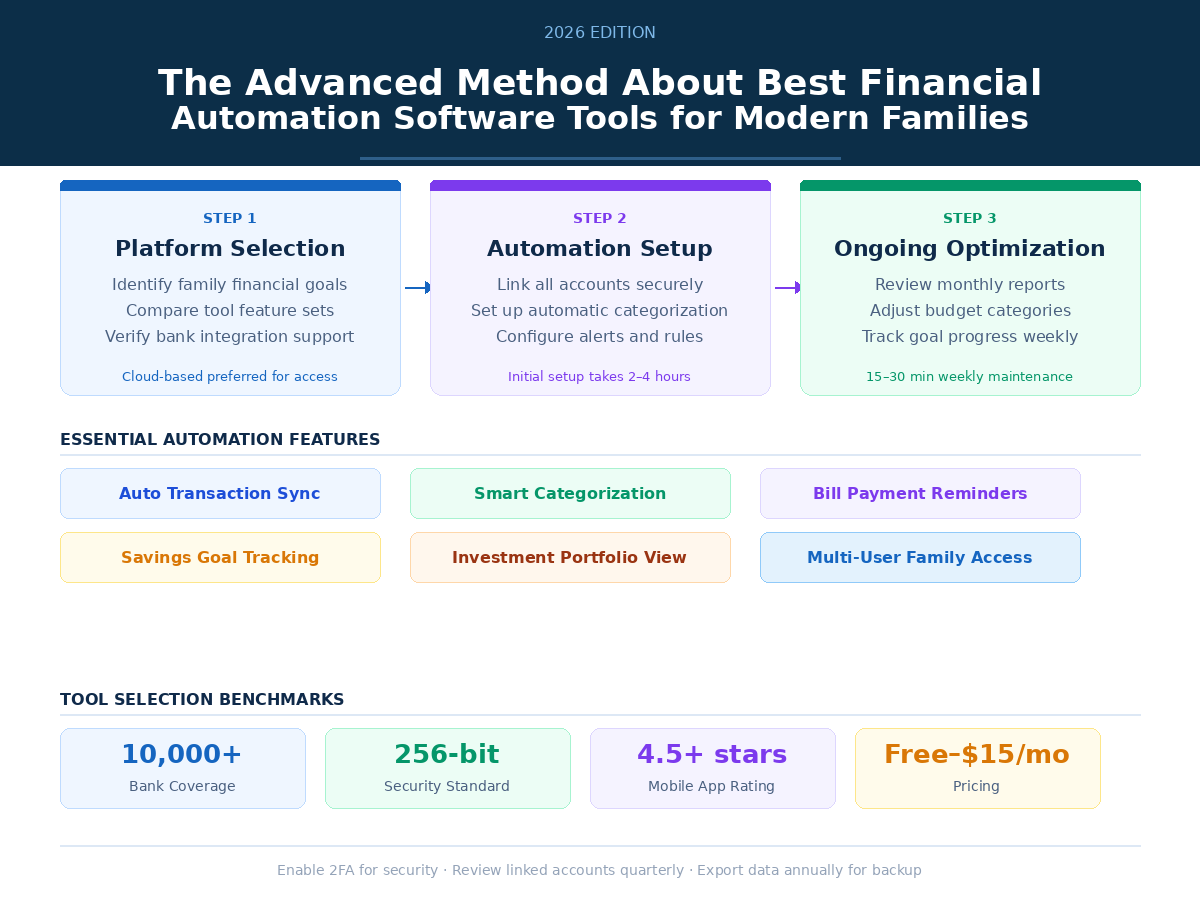
    The cornerstone of this advanced approach is the seamless integration of tax-advantaged accounts that were non-existent just a few years ago. With the recent launch of “Trump Accounts” under the Working Families Tax Cuts, parents are now preparing for the July 4th funding window, which allows for a $1,000 government contribution and up to $5,000 in annual private contributions for eligible children. Leading automation tools like Monarch Money and Origin have already updated their algorithms to track these specific limits, ensuring that families do not miss out on the 100% first-year deduction for qualifying business property or the new $10,000 pre-AGI deduction for auto loan interest. The advanced method requires software that doesn’t just record a transaction but categorizes it against these specific 2026 tax codes to maximize immediate liquidity.

    For high-earning households, the stakes are even higher due to the new Roth mandate for catch-up contributions. As of January 1, 2026, any worker earning over $150,000 in FICA wages from the previous year must make their 401(k) catch-up contributions on a Roth basis. This has created a massive data-tracking burden that traditional banking apps cannot handle. Modern families are turning to platforms like Copilot and Asseta AI, which utilize “agentic” features—AI agents that act unprompted to move funds between accounts based on real-time tax liability projections. These tools are essential for managing the 2026 contribution limits, which have risen to $24,500 for standard 401(k) deferrals and a significant $32,500 for those over 50 taking advantage of the $8,000 catch-up. For those in the “sweet spot” of ages 60 to 63, the enhanced catch-up of $11,250 requires even more precise automation to avoid over-contribution penalties while maximizing the tax-free growth of Roth assets.

    Beyond retirement, the advanced method addresses the “higher-for-longer” interest rate environment. With 30-year mortgage rates stabilizing around 6.3%, the software of choice for 2026 must include sophisticated debt-shredding modules. Tools like ProjectionLab and Empower now offer scenario modeling that accounts for the permanent 2026 tax brackets, helping families decide whether to prioritize paying down a 6% mortgage or investing in a market bolstered by the ongoing AI boom. These platforms use natural language processing, allowing a parent to simply ask, “How does the new $6,000 senior deduction for my live-in father affect our joint filing status this year?” and receive a verified, policy-accurate response within seconds.

    The true “advanced” element of today’s financial software is its ability to manage the “last mile” of inflation. As the Federal Reserve maintains a restrictive stance to pull inflation down to its 2% target, cash drag is a significant risk. Automation tools now feature “yield-chasing” bots that automatically sweep excess checking balances into the highest-yielding Treasury-backed accounts, which are currently outperforming traditional savings. This proactive movement of capital ensures that every dollar is working against the 3.8% headline CPI jump we saw in April.

    Ultimately, the best financial automation software for modern families in 2026 is one that acts as a digital Chief Financial Officer. It must bridge the gap between the household’s daily spending and the macro-economic realities of the OBBBA and SECURE 2.0. By leveraging tools that offer multi-entity tracking—managing the parents’ 401(k)s, the children’s Trump Accounts, and perhaps a small business’

  • The Strategic Balance Transfer Framework: A Professional Method for Interest Rate Optimization

    The Strategic Balance Transfer Framework: A Professional Method for Interest Rate Optimization

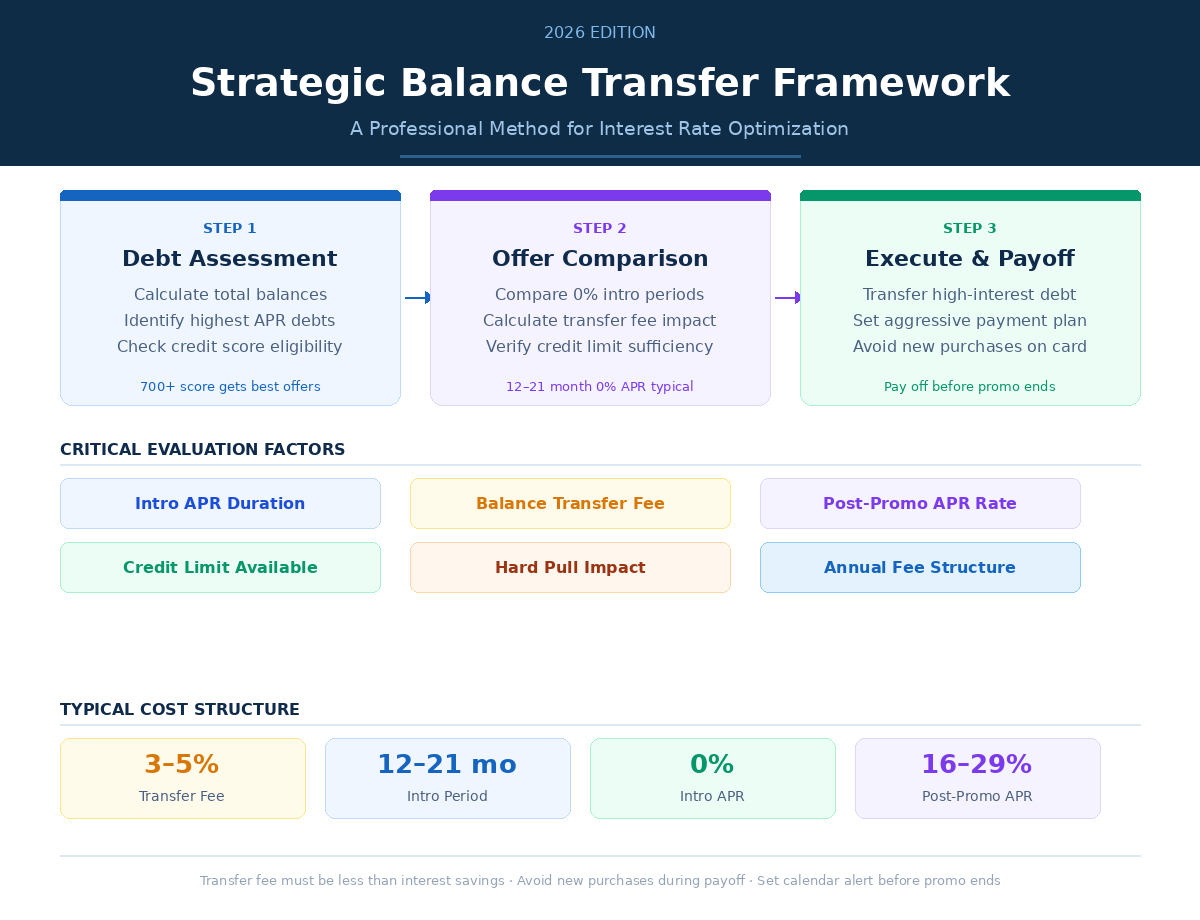
    In the current American economic landscape of May 2026, the cost of carrying consumer debt has reached a critical inflection point. With the average credit card APR for new offers climbing to a staggering 23.79% this month, many professionals find their monthly cash flow increasingly eroded by interest charges that far outpace traditional investment returns. This surge in rates follows a period of heightened volatility at the Federal Reserve, where the federal funds rate currently sits between 3.5% and 3.75%. While the market recently anticipated a period of easing, the latest FOMC minutes reveal a hawkish shift under the incoming leadership of Kevin Warsh, as persistent inflation—exacerbated by global energy shocks—has forced policymakers to signal that further rate hikes remain on the table. In this high-stakes environment, the Strategic Balance Transfer Framework is no longer just a debt management tool; it is a professional method for interest rate optimization that can save thousands of dollars in a single fiscal year.

    The framework begins with a rigorous audit of your current liability portfolio. In an era where the average interest rate on accounts actually accruing interest is hovering around 21.52%, the first step is to identify any revolving balance with an APR exceeding 18%. This is the threshold where the mathematical benefit of a transfer typically outweighs the associated costs. Once these high-interest targets are identified, the strategy shifts to the selection of a high-performance transfer vehicle. As of May 2026, the market remains competitive for those with excellent credit, with top-tier offers like the Wells Fargo Reflect® Card and the Citi® Diamond Preferred® Card offering 0% introductory APR periods for up to 21 months. These extended windows are vital, as they provide nearly two years of interest-free runway to aggressively pay down principal while the broader market braces for potential rate increases.

    However, a professional execution of this framework requires a precise calculation of the “break-even” point. Most leading issuers currently charge a balance transfer fee ranging from 3% to 5%. For a $10,000 balance, a 5% fee adds $500 to the total debt immediately. While this may seem substantial, a quick comparison against a 23.79% APR reveals that the fee is often recouped in less than three months of interest savings. The strategic advantage lies in the fact that every dollar paid after that break-even point goes directly toward the principal, effectively creating a self-funded deleveraging engine. It is also important to note the shifting regulatory environment; the Consumer Financial Protection Bureau (CFPB) recently finalized a significant rewrite of Regulation B, effective July 2026, which narrows the scope of certain fair lending protections. This shift underscores the importance of acting while credit availability for high-limit transfer cards remains robust, as future eligibility criteria may become more stringent under the new “intent-only” discrimination standards.

    The maintenance phase of the framework is where many individuals falter, yet it is the most critical for long-term optimization. A professional approach dictates that the new card should never be used for new purchases during the introductory period. Because of how payments are allocated under the Truth in Lending Act (Regulation Z), adding new 23% APR purchases to a 0% transfer balance can create a “interest trap” that complicates the repayment schedule. Instead, the framework utilizes an automated “accelerated amortization” schedule. By dividing the total transferred balance by the number of months in the introductory period—minus one month for a safety margin—you create a fixed monthly payment that guarantees a zero balance before the high variable rates kick back in. For example, a $10,000 transfer on a 21-month card should be repaid at approximately $500 per month to ensure the debt is extinguished by month 20.

    Finally, one must consider the impact on credit optics. While opening a new account and increasing credit utilization on a single card can cause a temporary dip in your credit score, the long-term reduction in total debt and the improvement in debt-to-income ratios typically result in a net positive outcome. In a 2026 economy where the “One Big Beautiful Act” has already begun to reshape the fiscal landscape, maintaining a high credit score is essential for accessing the best financial products. By treating a balance transfer as a strategic interest rate swap rather than a temporary fix, you position yourself to navigate the current hawkish Fed cycle with minimal exposure to the rising cost of capital. This framework is not merely about moving debt; it is about reclaiming the “interest spread” for your own net worth, transforming a monthly liability into a structured path toward financial sovereignty.

  • The 2026 Strategic Framework for Rapid Medical Funding: Top-Rated Online Personal Loan Solutions

    The 2026 Strategic Framework for Rapid Medical Funding: Top-Rated Online Personal Loan Solutions

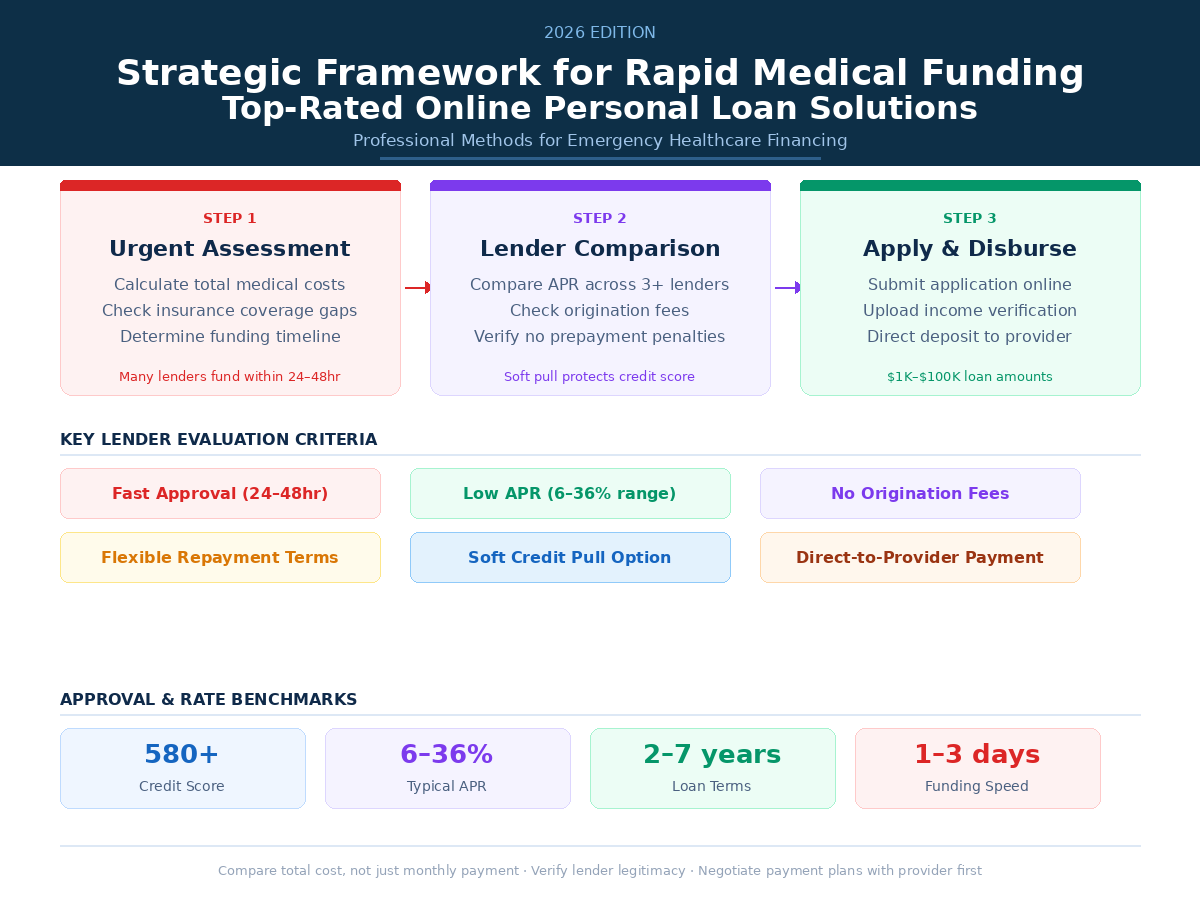
    The landscape of American healthcare financing has reached a pivotal juncture in May 2026, demanding a more sophisticated approach to managing unexpected clinical costs. As out-of-pocket expenditures continue to climb—projected to rise by nearly 4% this year alone—the traditional reliance on stagnant insurance models is being replaced by a 2026 strategic framework centered on liquidity and rapid-response credit. For many U.S. households, the challenge is no longer just the cost of care, but the speed at which that care must be funded. This urgency has propelled online personal loans to the forefront of medical financial planning, offering a streamlined alternative to the increasingly complex world of hospital billing and the tightening restrictions on federal medical education subsidies.

    Navigating this environment requires an understanding of the significant regulatory shifts that have reshaped the credit market this spring. Perhaps the most consequential change for the average consumer is the Consumer Financial Protection Bureau’s recent enforcement of the ban on using medical debt in credit-scoring models. As of May 2026, lenders are largely prohibited from penalizing your credit score for past medical bills, a move that has unlocked more competitive interest rates for millions of Americans who were previously sidelined by healthcare-related defaults. This policy shift, combined with the Personal Financial Data Rights Rule, has empowered borrowers to port their financial history across platforms, fostering a highly competitive lending environment where speed and transparency are the primary benchmarks of quality.

    When time is of the essence, the current market leaders in rapid medical funding have distinguished themselves through technological integration. LightStream remains a top-rated choice for those with strong credit profiles, maintaining its reputation for same-day funding. In the 2026 landscape, where many medical providers are utilizing AI-driven billing that demands faster settlement, LightStream’s ability to deposit funds into a borrower’s account before the close of business—provided the application is approved by the early afternoon—is a critical strategic advantage. For borrowers who may be facing a medical crisis that impacts their employment, SoFi has become an essential pillar of the strategic framework. Their unique inclusion of unemployment protection and career coaching within the loan agreement provides a safety net that traditional bank loans simply cannot match, ensuring that a temporary health setback does not lead to a permanent financial collapse.

    For those navigating the “funding gap” created by the upcoming July 1, 2026, changes to federal student and professional loans—which include the elimination of Grad PLUS loans for new medical students—personal loans are increasingly serving as a bridge for both educational and immediate clinical needs. Lenders like Upstart have refined their AI underwriting to look beyond traditional FICO scores, making them a premier solution for younger medical professionals or patients with “thin” credit files who need to fund procedures or equipment immediately. Meanwhile, Upgrade has gained traction by offering direct payment to medical providers, a feature that simplifies the administrative burden on the patient and often helps in negotiating “cash-pay” discounts with surgical centers and specialty clinics.

    The current interest rate environment also dictates a specific tactical approach. With the Federal Reserve holding the benchmark rate steady at 3.75% this May, personal loan APRs for well-qualified borrowers are hovering around the 13% to 14% mark for three-year terms. While these rates are higher than the historic lows of the early 2020s, they remain significantly more attractive than the compounding interest of medical credit cards or the 20% plus rates often found on standard revolving credit. A key component of the 2026 framework is the “30-day safety net” offered by providers like Discover, which allows borrowers to return the loan funds without interest or fees if their medical situation changes or if they secure alternative assistance shortly after funding.

    Ultimately, the 2026 strategic framework for rapid medical funding is about proactive agility. By leveraging the new consumer protections that shield your credit from medical debt and utilizing the high-speed digital infrastructure of top-rated online lenders, you can secure the care you need without the long-term trauma of financial instability. Whether you are bridging a gap in insurance coverage or preparing for a major elective procedure, the integration of these modern personal loan solutions ensures that your health remains the priority, supported by a financial foundation that is as resilient as it is fast. In this new era of American finance, being informed is your best insurance policy.

  • The 2026 Framework for Legal Capital Gains Tax Optimization on US Residential Real Estate Sales

    The 2026 Framework for Legal Capital Gains Tax Optimization on US Residential Real Estate Sales

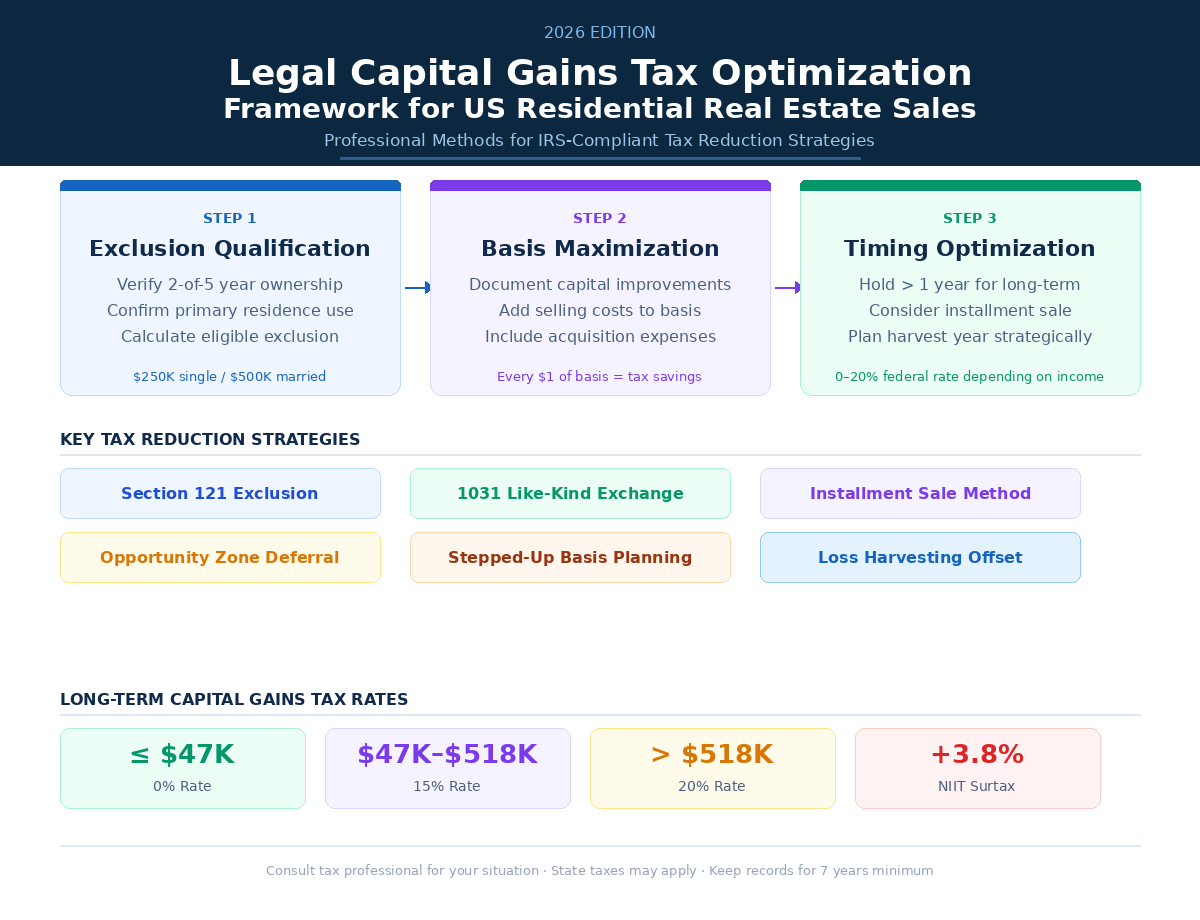
    Navigating the complexities of the U.S. tax code in 2026 requires a strategic approach, especially as the real estate market continues to evolve under the influence of the One Big Beautiful Bill Act (OBBBA) and the 21st Century ROAD to Housing Act. For homeowners and investors alike, the goal remains the same: maximizing the return on a property sale by legally minimizing the bite taken by capital gains taxes. The 2026 framework for tax optimization is built on three primary pillars: the Section 121 exclusion for primary residences, the strategic use of 1031 exchanges for investment properties, and a meticulous understanding of the updated 2026 tax brackets and deductions.

    For most Americans selling their primary home, the Section 121 exclusion remains the most powerful tool in the shed. As of May 2026, the IRS continues to allow single filers to exclude up to $250,000 of capital gains from their taxable income, while married couples filing jointly can exclude up to $500,000. To qualify for this significant tax break, you must meet the “two-out-of-five-year” rule, meaning you owned and lived in the home as your principal residence for at least 24 months during the five years leading up to the sale. A common optimization strategy in 2026 involves timing the sale to ensure these windows are met, or leveraging “partial exclusions” if a move is forced by a change in employment, health issues, or other unforeseen circumstances. For instance, if you’ve only lived in your home for one year but must move for a job that is at least 50 miles further away, you may still be eligible for 50% of the exclusion.

    Investors, however, face a different set of rules. While primary residences are shielded by Section 121, investment properties are subject to capital gains on the full profit unless a 1031 exchange is utilized. Despite years of legislative debate, the 1031 “like-kind” exchange remains fully intact in 2026, allowing investors to defer 100% of their capital gains and depreciation recapture taxes by reinvesting the proceeds into a new investment property. The framework for a successful exchange is rigid: you have exactly 45 days from the sale of your “relinquished” property to identify a “replacement” property and 180 days to close the deal. In the current 2026 environment, where inventory can be tight, savvy investors are identifying their replacement properties well before they even list their current holdings to avoid missing these non-negotiable IRS deadlines.

    One of the most significant shifts in the 2026 tax landscape is the increased State and Local Tax (SALT) deduction cap, which was boosted to $40,000 under the OBBBA. For sellers in high-tax states like California, New York, or New Jersey, this provides a much-needed buffer, allowing for a larger deduction of property and state income taxes against their federal liability. Additionally, the 2026 long-term capital gains brackets have been adjusted for inflation. For the 2026 tax year, the 0% rate applies to single filers with taxable income up to $49,450 and married couples up to $98,900. The 15% rate covers income up to $545,500 for individuals and $613,700 for joint filers, with anything above those thresholds taxed at 20%. High-income earners must also account for the 3.8% Net Investment Income Tax (NIIT), which applies to those with a modified adjusted gross income over $200,000 (single) or $250,000 (married).

    Optimization also happens at the “basis” level. Every dollar spent on capital improvements—such as a new roof, a kitchen remodel, or a finished basement—is added to your property’s cost basis, which directly reduces the taxable gain upon sale. In 2026, maintaining a digital “basis diary” with receipts and contracts is essential. While routine repairs like painting or fixing a leak do not count, permanent improvements do. By combining a maximized cost basis with the Section 121 exclusion or a 1031 exchange, and staying mindful of the 2026 income thresholds, sellers can navigate the current real estate market with a framework that prioritizes wealth preservation and long-term financial health. As always, because individual tax situations vary, consulting with a qualified tax professional is the final, critical step in any real estate exit strategy.

  • Strategic Yield Optimization: The 2026 Framework for Conservative Monthly Income via High-Yield Corporate Bonds

    Strategic Yield Optimization: The 2026 Framework for Conservative Monthly Income via High-Yield Corporate Bonds

    As we navigate the midpoint of 2026, the American financial landscape has entered a period of profound transition that demands a recalibration of traditional income strategies. The recent leadership change at the Federal Reserve, with Kevin Warsh succeeding Jerome Powell as Chair, has signaled a definitive shift toward a more hawkish, “inflation-first” monetary policy. Coupled with the persistent energy price volatility stemming from the ongoing conflict in Iran and the expiration of the Tax Cuts and Jobs Act (TCJA) at the end of 2025, conservative investors are facing a unique “double squeeze”: higher personal tax brackets and sticky inflation that erodes the purchasing power of traditional fixed-income yields. In this environment, the 2026 Framework for Strategic Yield Optimization offers a disciplined path for generating reliable monthly income through high-yield corporate bonds without compromising the structural integrity of a conservative portfolio.

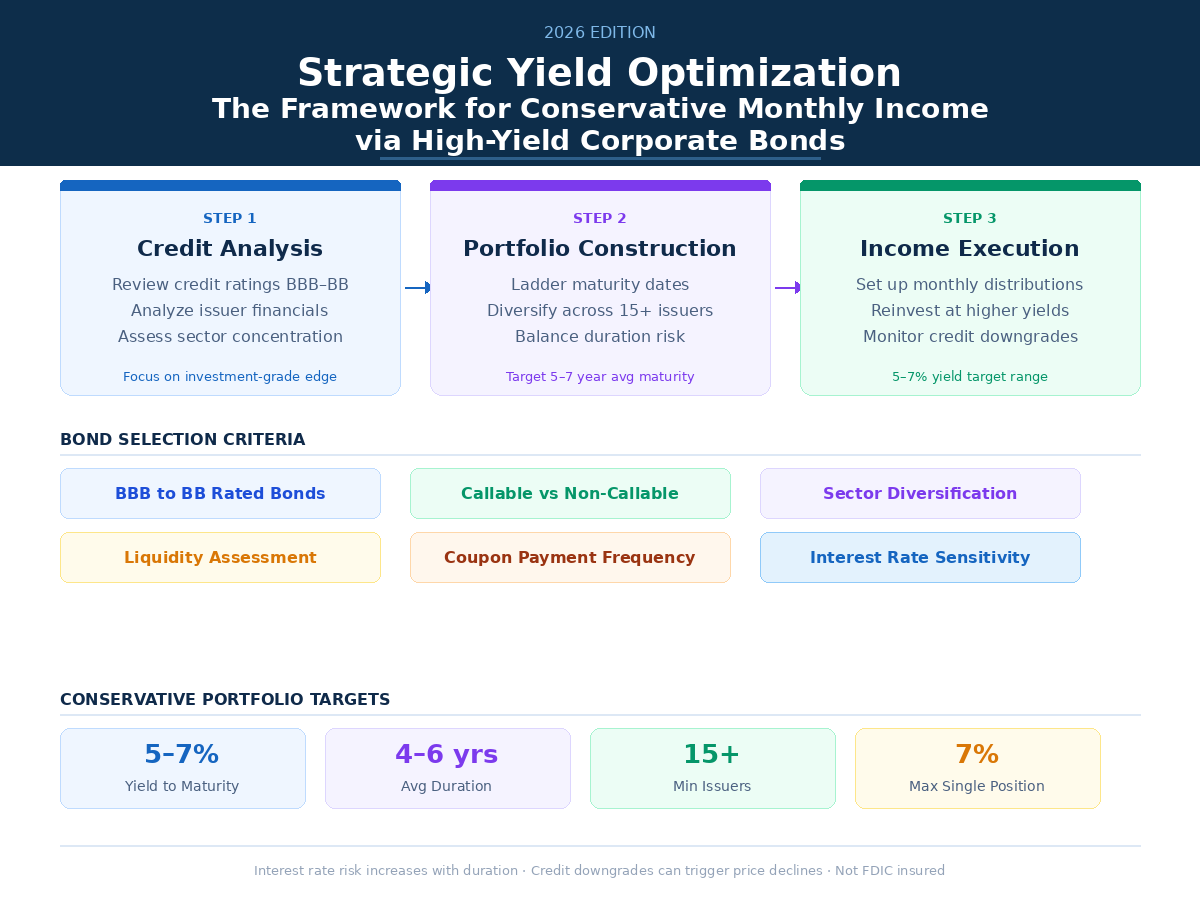
    The cornerstone of this framework is a refined focus on “quality junk”—specifically, the BB-rated segment of the corporate credit market. While the term “high-yield” often conjures images of distressed debt, the 2026 market is characterized by a massive influx of “fallen angels” and AI-driven debt issuances from fundamentally sound technology and industrial firms. These companies are leveraging the current AI infrastructure boom to finance long-term growth, resulting in a robust supply of bonds that offer a significant yield premium over Treasuries. By targeting the upper tier of the high-yield spectrum, investors can capture yields currently hovering between 6.5% and 7.2%, providing a necessary buffer against a headline inflation rate that has recently accelerated to 3.8%. This “BB sweet spot” allows for a conservative posture because these issuers typically maintain stronger balance sheets and higher interest coverage ratios than their lower-rated peers, offering a layer of protection against the default risks that often plague the CCC-rated tier during periods of economic cooling.

    Active duration management is the second pillar of the 2026 framework. With the Warsh-led Fed signaling that the era of rate cuts is firmly in the rearview mirror—and even hinting at potential hikes to combat energy-driven price spikes—investors must avoid the “duration trap.” Long-dated bonds are increasingly vulnerable to price depreciation as the yield curve steepens. Consequently, the current framework prioritizes a short-to-intermediate duration stance, specifically targeting maturities in the three-to-five-year range. This positioning minimizes interest rate sensitivity while allowing investors to reinvest maturing capital into the higher-coupon environments that the “higher-for-longer” regime provides. By laddering these maturities, a conservative investor can create a “yield engine” that produces consistent monthly cash flow, effectively turning market volatility into a tool for compounding rather than a threat to principal.

    Tax efficiency has become an urgent priority following the sunset of the TCJA provisions on January 1, 2026. With the top individual marginal tax rate reverting to 39.6% and the standard deduction nearly halved, the “all-in” return on corporate bonds is now heavily dependent on where those assets are held. For the conservative monthly income seeker, the 2026 framework mandates the use of tax-advantaged accounts, such as Roth IRAs or 401(k)s, to shield high-coupon payments from these higher tax rates. If holding bonds in taxable accounts is unavoidable, the framework suggests a “barbell” approach: pairing high-yield corporates with the now-attractive yields found in the municipal bond market, which has seen a resurgence as state and local governments offer competitive, tax-exempt rates to fund infrastructure resilience.

    Furthermore, the implementation of the Personal Financial Data Rights Rule in April 2026 has revolutionized how investors access these yields. This “open banking” mandate has made it easier than ever to move capital between institutions to find the most competitive brokerage spreads and specialized high-yield funds. Conservative investors should leverage this transparency to seek out active managers who can navigate the “K-shaped” credit market. As the AI boom continues to drive disparate outcomes across sectors, the ability to distinguish between a company issuing debt for productive innovation and one issuing debt for survival is the difference between a stable monthly check and a capital loss.

    Ultimately, Strategic Yield Optimization in 2026 is not about chasing the highest possible number; it is about securing a “real” yield—one that outpaces both the IRS and the rising cost of living. By focusing on high-quality credit, maintaining a disciplined short-duration ladder, and maximizing tax-advantaged shells, US investors can build a monthly income stream that is as resilient as it is rewarding. In an era of new Fed leadership and geopolitical uncertainty, this framework provides the clarity needed to move from a defensive crouch to a position of strategic strength.

  • The Strategic Framework for Structuring Private Money Loans in Fix and Flip Real Estate

    The Strategic Framework for Structuring Private Money Loans in Fix and Flip Real Estate

    In the current climate of May 2026, the United States real estate market has transitioned into a phase of disciplined stabilization. For fix-and-flip investors, the “easy wins” of the post-pandemic era have been replaced by a landscape that demands surgical precision in both project execution and financial structuring. As of today, May 21, 2026, the Federal Reserve has maintained the federal funds rate in a target range of 3.5% to 3.75%. However, with recent FOMC minutes signaling a hawkish tilt and the incoming Fed Chair Kevin Warsh set to take the helm tomorrow, private money lenders and borrowers must navigate a “higher-for-longer” reality that makes the strategic framework of a loan more critical than the capital itself.

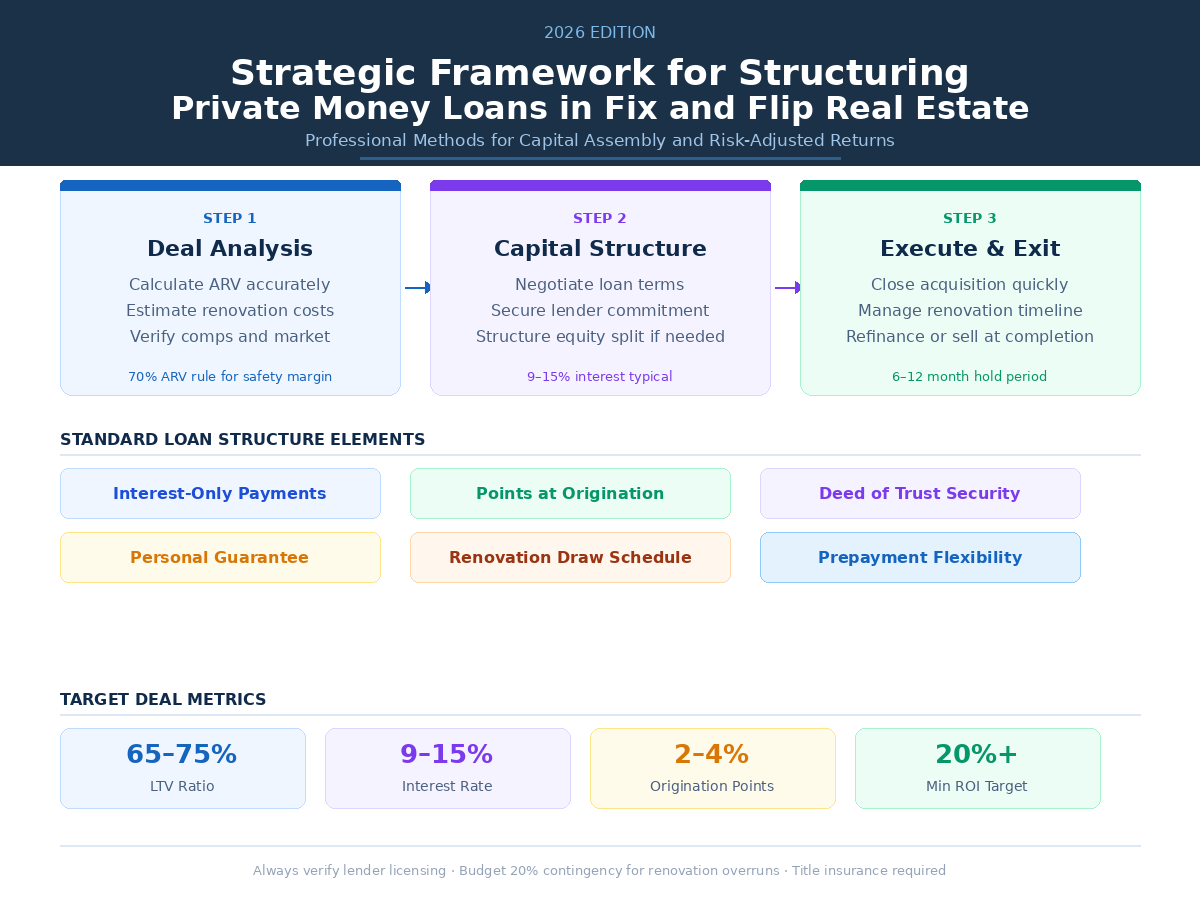
    A robust framework for structuring private money loans in 2026 begins with a shift from simple asset-based lending to a more holistic, risk-adjusted underwriting model. While the median gross profit for a US flip currently hovers around $65,300, the average return on investment has compressed to approximately 25%. This margin pressure means that the traditional “70% of ARV” (After Repair Value) rule is no longer a one-size-fits-all solution. Sophisticated lenders are now utilizing a dual-cap structure, often limiting loans to 90% of total cost (LTC) while simultaneously ensuring the total leverage does not exceed 75% of the projected ARV. This protects the lender against the slight cooling of home price appreciation seen in the spring 2026 data, while providing the investor with enough leverage to keep their personal liquidity intact for unforeseen renovation hurdles.

    The cost of capital in today’s market reflects this nuanced risk environment. Private money rates for seasoned flippers currently range between 8.5% and 11.5%, with origination fees typically landing between one and two points. For the borrower, the strategy lies in negotiating “interest-only” periods that align strictly with the renovation timeline. In 2026, we are seeing a rise in “staged draw” structures where interest is only charged on the disbursed funds rather than the total committed loan amount. This “Dutch interest” model is a powerful tool for investors to preserve cash flow during the early, capital-intensive phases of a project, such as foundation work or major system overhauls.

    Equally critical to the 2026 framework is the evolving regulatory and tax environment. Private lenders must now account for the new IRS reporting requirements that took effect this tax season, which mandate more rigorous transparency for privately held mortgage notes, similar to the institutional Form 1098. Furthermore, the Homebuyers Privacy Protection Act, which became effective in March 2026, has fundamentally changed how “trigger leads” are handled, making it essential for lenders to maintain direct, consent-based relationships with their borrowers. In states like California, Nevada, and Utah, the push for stricter business-purpose licensing means that the “strategic” part of the framework must include a verified compliance check to ensure the loan’s enforceability and the lender’s standing.

    Beyond the initial purchase and rehab, the most successful frameworks in the current market incorporate a “Plan B” exit strategy. With the 30-year fixed mortgage rate hovering near 6.23%, the traditional exit of selling to a retail buyer is being supplemented by the “fix-to-rent” model. Over 50% of active flippers in 2026 are now structuring their private money loans as “bridge-to-perm” products. This allows the investor to flip the property into a long-term Debt Service Coverage Ratio (DSCR) loan if the retail market softens during the renovation. By embedding a pre-negotiated refinance option into the initial private money structure, investors can mitigate the risk of “stale” inventory and pivot to a cash-flowing rental strategy without the stress of a looming balloon payment.

    Ultimately, structuring private money loans in 2026 is an exercise in balancing speed with sustainability. While fintech-driven hard money platforms can now close in as little as three to five days, the strategic advantage goes to those who prioritize the relationship-driven nuances of the deal. This includes clear communication on draw schedules, a deep understanding of local market inventory—particularly in high-growth corridors in the South and West—and a commitment to regulatory transparency. As we look toward the second half of 2026, the investors who thrive will be those who view their private money lender not just as a source of funds, but as a strategic partner in a complex, data-driven ecosystem.

  • 2026 Wealth Optimization: A Strategic Framework for Choosing Between High-Yield Savings and CDs

    2026 Wealth Optimization: A Strategic Framework for Choosing Between High-Yield Savings and CDs

    As of May 21, 2026, the American financial landscape is navigating a complex intersection of geopolitical tension and persistent inflationary pressure. With the annual inflation rate recently accelerating to 3.8%—driven largely by energy spikes following the ongoing conflict in the Middle East—the Federal Reserve has maintained a steady but increasingly hawkish stance. Currently, the federal funds rate sits between 3.5% and 3.75%, but recent FOMC minutes suggest that the era of “easy money” is far from returning. For US savers, this environment creates a unique “hawkish hold” scenario where the choice between a High-Yield Savings Account (HYSA) and a Certificate of Deposit (CD) is no longer just about interest rates, but about strategic positioning against a volatile economic backdrop.

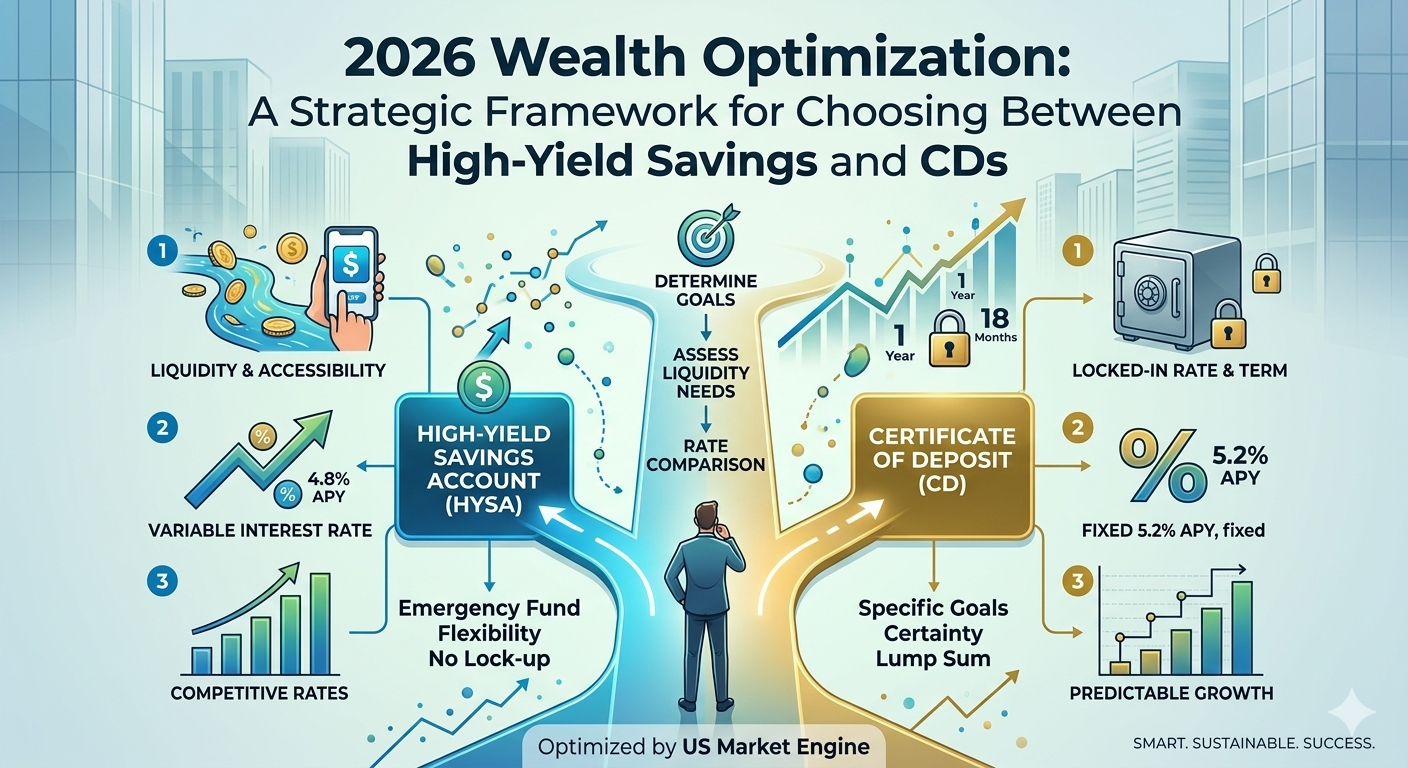
    Wealth optimization in 2026 requires a framework that prioritizes “real returns”—the yield you earn after accounting for that 3.8% inflation. Currently, top-tier HYSAs are offering yields around 4.10% to 4.16%, providing a slim but vital margin of growth above the rising cost of living. The primary advantage of the HYSA in today’s market is its agility. Thanks to the newly implemented Personal Financial Data Rights Rule, which took full effect earlier this year, the friction of moving money between institutions has vanished. This “Open Banking” era allows you to jump to a higher-yielding competitor in minutes, ensuring your emergency fund or short-term cash isn’t stagnating in a legacy account while the Fed debates its next move. If you value liquidity and want the ability to pivot should the Fed decide to hike rates further this summer, the HYSA remains your most potent tool.

    However, the CD market is currently presenting a compelling “lock-in” opportunity that hasn’t been this attractive in years. We are seeing a notable inversion where short-term CDs are outperforming their long-term counterparts. For instance, 6-month jumbo CDs are hitting peaks as high as 4.94%, while 1-year terms are hovering around 4.10%. This suggests that while banks are hungry for immediate deposits to shore up their balance sheets, they expect rates to eventually cool by 2027. By choosing a 6-month or 1-year CD today, you are essentially “betting” that the Fed will either hold steady or that inflation will begin to moderate. You are locking in a guaranteed return that significantly outpaces current inflation, providing a safe harbor for capital that you don’t need for immediate expenses.

    The strategic framework for choosing between these two depends on your view of the “War-Induced Inflation” cycle. If you believe the energy shocks from the Iran conflict will continue to push the Consumer Price Index higher, staying liquid in an HYSA allows you to capture the higher rates that would inevitably follow a Fed rate hike. Conversely, if you suspect the economy is nearing a tipping point where the Fed must eventually cut rates to prevent a recession—despite the current hawkish rhetoric—locking in a 4.9% yield on a short-term CD is a masterclass in wealth preservation. Many savvy investors are currently utilizing a “CD Ladder” strategy, splitting their cash between a liquid HYSA for immediate needs and staggered 6-month CDs to capture these peak yields without sacrificing total access to their capital.

    Furthermore, it is important to be aware of the 2026 tightening of internal monitoring systems across major US banks. While the $10,000 reporting threshold remains the federal standard, banks are now utilizing more sophisticated AI-driven compliance tools to review large deposits and transfers. When moving significant sums to optimize your wealth, ensure your documentation is in order to avoid the “verification holds” that have become more common this spring. In this high-stakes environment, the winner isn’t necessarily the person with the highest APY, but the one who balances high-yield growth with the flexibility to adapt to a rapidly shifting global economy. Whether you choose the fluid nature of an HYSA or the guaranteed fortress of a CD, the key is to remain active; in 2026, the cost of financial inertia is higher than ever.

  • The Strategic Debt Repayment Framework: How to Clear Credit Card Balances Rapidly While Optimizing Your Credit Score

    The Strategic Debt Repayment Framework: How to Clear Credit Card Balances Rapidly While Optimizing Your Credit Score

    The financial landscape of May 2026 presents a unique set of challenges for the American consumer. With the Federal Reserve, now under the leadership of Chair Kevin Warsh, maintaining the federal funds rate in the 3.5% to 3.75% range, the era of “cheap money” remains a distant memory. For those carrying credit card balances, the reality is even more stark: average APRs for new offers have climbed to approximately 23.79%, with many rewards cards pushing well past the 25% mark. In this high-interest environment, a haphazard approach to debt is no longer just inefficient; it is a significant drain on your long-term wealth. To navigate this, you need a strategic debt repayment framework that prioritizes mathematical efficiency while simultaneously shielding your credit score from the volatility of modern reporting standards.

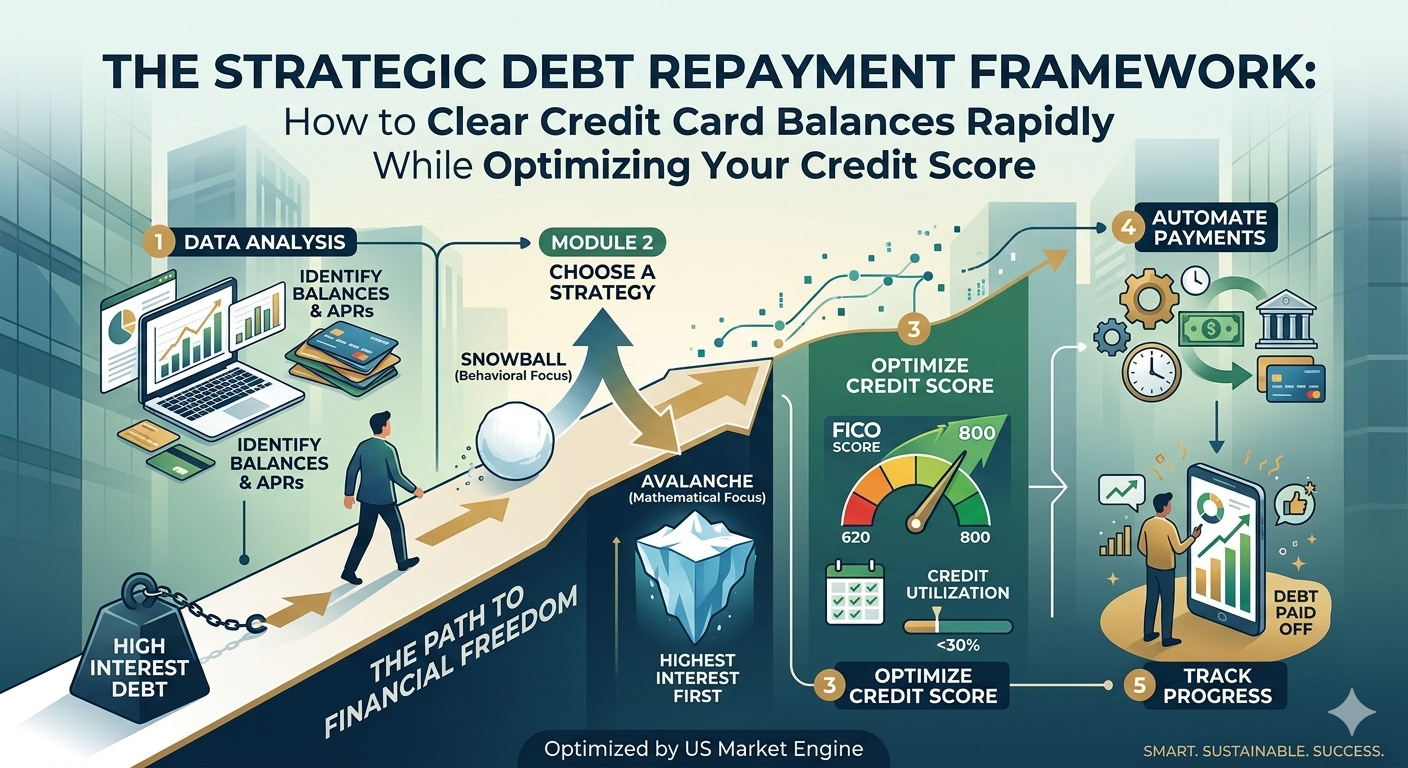
    The foundation of any rapid repayment strategy in 2026 must be the “Debt Avalanche” method, which has gained renewed importance as interest rates have surged. While the “Debt Snowball” focuses on psychological wins by paying off small balances first, the Avalanche targets the highest-interest debt regardless of the balance size. In an economy where a $5,000 balance at 24% APR can accrue over $100 in interest charges every single month, the priority must be to neutralize the most expensive capital first. By making the minimum payments on all accounts and funneling every extra dollar into the card with the highest APR, you effectively “guarantee” a return on your money equal to that interest rate. This is particularly critical now that the Consumer Financial Protection Bureau’s (CFPB) attempt to cap late fees at $8 was voided by federal courts last year. With late fees still hovering between $30 and $43 for most major issuers, the cost of a single missed payment can now wipe out weeks of progress, making automated minimum payments a non-negotiable first step in your framework.

    As you aggressively pay down principal, you must also manage the optics of your credit report to optimize your score. In 2026, credit scoring models like FICO 10T and VantageScore 4.0 have become more sensitive to “trended data,” meaning they look at whether your balances are rising or falling over time rather than just a single snapshot. To maximize your score, you should aim for a credit utilization ratio below 10% on each individual card, not just across your total available credit. Furthermore, be mindful of the recent integration of Buy Now, Pay Later (BNPL) plans into standard credit reports. While these installment plans were once “invisible” debt, they now factor into your debt-to-income ratio and payment history. If you are using BNPL services alongside credit cards, ensure those payments are perfectly timed, as the new reporting transparency means a single late “pay-in-four” installment can now ding your FICO score just as severely as a missed mortgage payment.

    Strategic optimization also requires understanding what not to worry about. As of May 2026, the three major credit bureaus—Equifax, Experian, and TransUnion—continue their voluntary policy of excluding medical collections under $500 from credit reports, as well as any medical debt that has been paid in full. Even though the broader CFPB rule to ban all medical debt from reports was vacated in 2025, these voluntary protections remain a vital safety net. If you are balancing credit card debt alongside medical bills, prioritize the credit cards. High-interest revolving debt is a “live” threat to your score and net worth, whereas medical debt under the $500 threshold is effectively neutralized for scoring purposes. This allows you to keep your liquidity focused where it does the most work: killing off those 23%+ APR balances.

    For those with credit scores still in the “Good” to “Excellent” range (700+), the 0% APR balance transfer remains the most powerful weapon in the arsenal, though the window is narrowing. Despite the Fed’s “higher for longer” stance, some issuers are still offering 12- to 15-month introductory windows to attract high-quality borrowers. However, with the Credit Card Competition Act currently moving through Congress, there is ongoing speculation that rewards programs and sign-up incentives may be scaled back if swipe fees are reduced. If you have the opportunity to lock in a 0% transfer today, do so before the market shifts. Moving a high-interest balance to a 0% card immediately halts the “interest bleed,” allowing every cent of your payment to hit the principal. Just be sure to calculate the transfer fee—usually 3% to 5%—to ensure the math still favors the move.

    Ultimately, clearing credit card debt in 2026 is a game of precision. By combining the mathematical rigor of the Debt Avalanche with