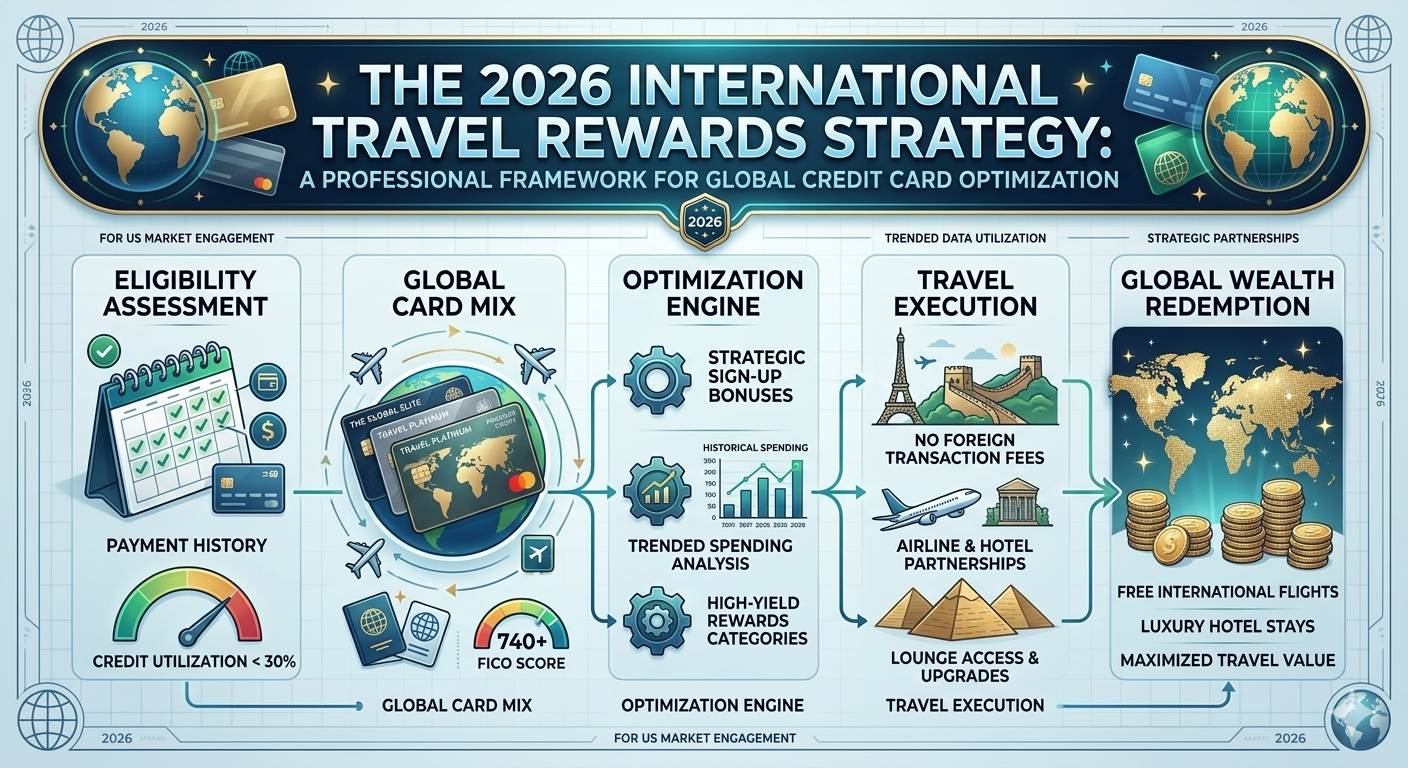
As we cross the midpoint of 2026, the landscape of international travel rewards has shifted from a game of simple point accumulation to a sophisticated exercise in ecosystem management. For the American professional, navigating this terrain requires more than just a high-tier card; it demands a framework that accounts for the Federal Reserve’s stabilized interest rates, the aggressive “premiumization” of card benefits, and the rise of AI-driven redemption strategies. With the Federal Open Market Committee recently holding the federal funds rate in the 3.5% to 3.75% range, we have seen a slight cooling in the downward trend of APRs, which currently hover around an average of 23.79%. While the savvy traveler never carries a balance, these macro-economic indicators have directly influenced how issuers like American Express, Chase, and Capital One structure their annual fees and “lifestyle” credits to maintain profitability in a post-inflationary market.
The most striking development in May 2026 is the sheer scale of the premium card arms race. The American Express Platinum Card now commands an $895 annual fee, yet it remains a cornerstone of the professional framework due to its unparalleled access to over 1,550 global lounges and a revamped suite of digital nomad credits. Simultaneously, Chase has responded with a massive 150,000-point welcome offer on the Sapphire Reserve, though the card’s annual fee has climbed to $795. This “high-fee, high-value” model means that optimization is no longer optional. To justify these costs, travelers must look beyond the surface-level perks and dive into the nuances of transfer partner ratios, which have become increasingly volatile this year. For instance, while Emirates and Cathay Pacific devalued their transfer rates earlier this spring, the American Express-to-AeroMexico pipeline remains a standout at a 1:1.6 ratio, offering a rare opportunity for outsized value on long-haul business class routes.
A professional strategy in 2026 also requires a keen eye on the legislative environment. The ongoing debate over the Credit Card Fairness Act, which seeks to codify the $8 late fee cap after the previous CFPB rule was vacated in 2025, has led many banks to tighten their approval algorithms. This makes “credit hygiene” more critical than ever for those looking to rotate into new products. Furthermore, the looming shadow of the Credit Card Competition Act continues to influence how issuers design their rewards. We are seeing a pivot away from flat-rate cashback toward “merchant-funded” and “card-linked” offers. These are no longer the clunky coupons of the past; today’s AI-native loyalty programs use real-time transaction signals to surface hyper-personalized bonuses. If you are dining in Tokyo or shopping in Paris, your banking app is now likely to push a 10x “flash bonus” for a specific local partner, effectively turning your smartphone into a dynamic rewards engine.
For those focused on hotel stays, the early 2026 addition of Wyndham Rewards as a 1:1 Chase Ultimate Rewards partner has opened up significant value in the “vacation rental” space, particularly for families utilizing the Vacasa partnership. However, the true “pro” move this season involves the Bilt ecosystem. No longer just for renters, the Bilt Palladium Card has emerged as a formidable competitor in the premium space, offering unique transfer paths to programs like Alaska Airlines and Turkish Miles&Smiles that other major issuers lack. When combined with the 65% transfer bonuses we’ve seen recently from Chase to Marriott Bonvoy, the ability to “stack” rewards across multiple ecosystems has become the hallmark of the elite traveler.
Sustainability has also moved from a marketing buzzword to a functional part of the cardholder experience. In 2026, many premium cards are issued in reclaimed wood or ocean plastic, but the real value lies in the integrated carbon-tracking tools. These platforms now allow travelers to “burn” points to offset the footprint of their international flights at a fixed, favorable rate, a feature that has become a requirement for corporate travelers adhering to new ESG reporting standards. As you refine your strategy for the remainder of the year, remember that the goal is no longer just to earn points, but to maintain a flexible portfolio that can adapt to sudden partner devaluations and capitalize on the real-time, AI-driven opportunities that define this new era of global mobility. By balancing high-fee “anchor” cards with agile earners like the Amex Gold—which still dominates the 4x dining category—the modern traveler can ensure that every dollar spent is a step toward the next first-class cabin.
Leave a Reply