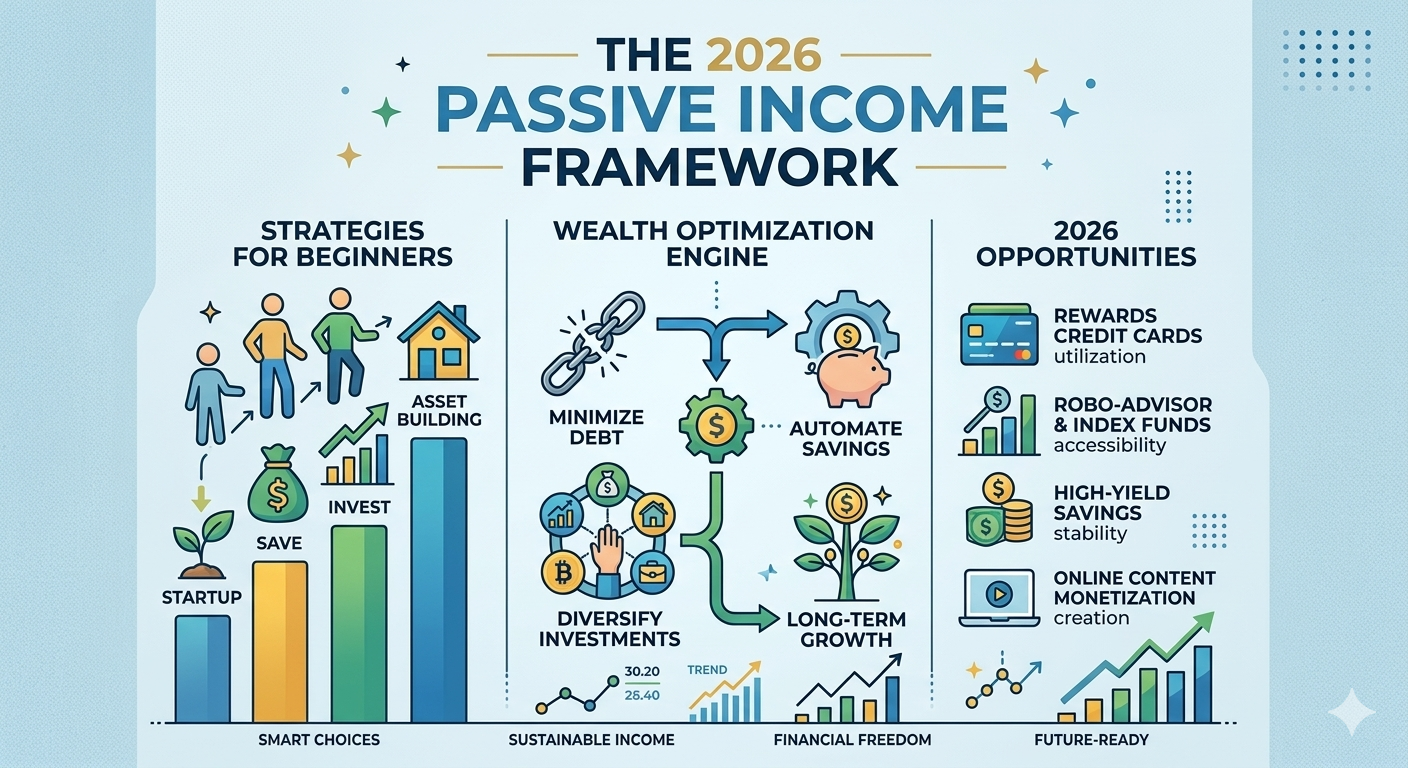
As of May 21, 2026, the landscape of American wealth building has shifted from the speculative frenzies of the early 2020s toward a more disciplined, policy-driven framework. For the modern beginner, optimizing wealth no longer means chasing the next viral digital asset; instead, it requires a professional-grade understanding of the current high-inflation environment and the specific tax advantages codified by recent legislation. With the Federal Reserve’s benchmark interest rate currently holding steady between 3.5% and 3.75%, and the newly sworn-in Fed Chair Kevin Warsh signaling a potential “policy firming” to combat a 6% surge in consumer price inflation, the 2026 framework for passive income is built on the pillars of tax-sheltered compounding and high-yield stability.
The most accessible entry point for beginner wealth optimization this year lies within the updated Internal Revenue Service contribution limits. For the 2026 tax year, the IRS has increased the 401(k), 403(b), and most 457 plan elective deferral limits to $24,500, a significant jump that allows individuals to shield more of their primary income from the current 10% to 37% tax brackets. Furthermore, the Individual Retirement Account (IRA) limit has risen to $7,500. A critical professional strategy for 2026 involves navigating the new SECURE 2.0 requirements: if your prior-year wages exceeded $150,000, your catch-up contributions must now be made on a Roth basis. This shift toward after-tax contributions may seem like a hurdle, but for the long-term optimizer, it creates a powerful pool of tax-free liquidity that is essential for a diversified passive income portfolio.
Beyond traditional retirement accounts, the real estate market in May 2026 offers a nuanced opportunity for those who can look past national headlines. While the average 30-year fixed mortgage rate remains elevated near 6.3%, the market is finally showing signs of “normalization” rather than a crash. Inventory levels have improved, and in tech-heavy corridors like Seattle and San Jose, property values are beginning to look undervalued relative to their long-term economic output. For beginners, the professional approach in 2026 is to utilize fractional ownership platforms or Real Estate Investment Trusts (REITs) that benefit from the 20% Qualified Business Income (QBI) deduction, which was recently made permanent under the One Big Beautiful Bill Act (OBBBA). This legislation has fundamentally changed the math for passive earners by stabilizing the tax treatment of pass-through income, making real estate-backed dividends more attractive than they were just two years ago.
The current inflationary pressure, driven largely by energy shocks and global volatility, has also revitalized the “cash” component of a passive income strategy. In 2026, holding a portion of your wealth in high-yield savings accounts or short-term Certificates of Deposit (CDs) is no longer a defensive move—it is a yield-generating strategy. With many financial institutions offering guaranteed returns that rival the historical averages of the S&P 500, beginners can build a “liquidity ladder” that captures these higher rates while maintaining the flexibility to pivot as the Fed’s June meeting approaches. Professional wealth managers are currently emphasizing “portfolio resilience,” which means balancing these fixed-income yields against the rising cost of living.
Tax efficiency is the final, often overlooked, component of the 2026 framework. The OBBBA has not only made the 2017 tax cuts permanent but has also introduced a new “bonus” deduction for seniors and expanded the standard deduction to $16,100 for single filers and $32,200 for those married filing jointly. For the beginner, this means that the first several thousand dollars of your passive income may effectively be tax-free. Additionally, the new $1,000 charitable deduction for non-itemizers allows you to offset gains while supporting community causes. By automating contributions to low-cost, dividend-paying ETFs and utilizing these new standard deduction thresholds, a beginner can achieve a level of wealth optimization that was previously reserved for high-net-worth individuals.
Ultimately, the 2026 Passive Income Framework is about moving away from the “get rich quick” mentality and toward a “get rich surely” methodology. By maximizing the $24,500 401(k) limit, leveraging the permanent QBI deductions for real estate, and capturing the 3.75% yields available in the current rate environment, you are
Leave a Reply